<?xml version="1.0" encoding="ISO-8859-1"?>
<feed version="0.3" xmlns="http://purl.org/atom/ns#" xmlns:dc="http://purl.org/dc/elements/1.1/" xml:lang="en">
  <title>Protein Spotlight</title>
  <link rel="alternate" type="text/html" href="http://www.expasy.org/spotlight/" />
  <modified>2010-02-23T12:46:39Z</modified>
  <tagline>one month, one protein</tagline>
  <id>tag:www.expasy.org,2010:/spotlight//2</id>
  <generator url="http://www.movabletype.org/" version="3.36">Movable Type</generator>
  <copyright>Copyright (c) 2010, Vivienne Baillie Gerritsen</copyright>
  <entry>
    <title>sickly smell</title>
    <link rel="alternate" type="text/html" href="http://www.expasy.org/spotlight/back_issues/sptlt114.shtml" />
    <modified>2010-02-23T12:46:39Z</modified>
    <issued>2010-02-23T13:07:55+01:00</issued>
    <id>tag:www.expasy.org,2010:/spotlight//2.768</id>
    <created>2010-02-23T12:07:55Z</created>
    <summary type="text/plain">Words are not the only means of communication. Not only are they specific to the human species but there are many other ways of conveying messages, and – since the beginning of dawn – all kingdoms have shown great imagination in this area. Bacteria exchange information via chemical messages they secrete. Flowers produce scents to attract pollinators. Many animals are capable of turning on a possible partner by exuding pheromones. Releasing all sorts of molecules is one thing, but you also need something on the receiving end to sense them. These are receptors. There are many different kinds of receptors, found in many different tissues or cellular compartments, all of which are there to sense their matching molecule and relay the information further, i.e. the central nervous system in animals. Subsequently, the organism will be instructed to run away, let itself be seduced or avoid spoiled food, for instance. One particularly surprising receptor discovered in the nose of mice – a formyl peptide receptor – seems to have the ability to sniff out disease. </summary>
    <author>
      <name>Vivienne Baillie Gerritsen</name>
      
      <email>spotlight@isb-sib.ch</email>
    </author>
    <dc:subject>Article</dc:subject>
    <content type="text/html" mode="escaped" xml:lang="en" xml:base="http://www.expasy.org/spotlight/">
      <![CDATA[<p><b>Words are not the only means of communication. Not only are they specific to the human species but there are many other ways of conveying messages, and – since the dawn of time – all kingdoms have shown great imagination in this area. Bacteria exchange information via chemical messages they secrete. Flowers produce scents to attract pollinators. Many animals are capable of turning on a possible partner by exuding pheromones. Releasing all sorts of molecules is one thing, but you also need something on the receiving end to sense them. These are receptors. There are many different kinds of receptors, found in many different tissues or cellular compartments, all of which are there to sense their matching molecule and relay the information further, i.e. the central nervous system in animals. Subsequently, the organism will be instructed to run away, let itself be seduced or avoid spoiled food, for instance. One particularly surprising receptor discovered in the nose of mice – a formyl peptide receptor – seems to have the ability to sniff out disease. </p></b>

  <div class="quoteleft">
&#171;The nose of a mammal is like a factory, sometimes of vital importance. &#187;
</div>
 

<p>The nose of a mammal is like a factory, sometimes of vital importance. All day long it receives all sorts of molecules with which it has to deal. Many different kinds of receptors are found in a mammal’s nasal cavity. The more obvious ones, perhaps, are those that ‘sniff’ scents – a bad one or a good one. These sensations are then relayed to the brain which will subsequently suggest how to behave, i.e. flee the situation or copulate for example. But there are also receptors which are far more subtle – these are the receptors which are capable of ‘sniffing’ odourless substances, amongst which are the well-known pheromones that are capable of sexually arousing a potential mate or instilling a sense of fear. Most mammals are armed with the pheromone machinery; humans, however, seem only to carry the remains of such a system. Indeed, to date, no one has been able to demonstrate that we are still under the influence of pheromones. And, recently, yet another kind of receptor was discovered in the nose of mice – the formyl peptide receptor (FPR) – which seems to have the astonishing skill of detecting disease. 

<p>Formyl peptide receptors, per se, are nothing new really. They have been known for a long time. FPRs are found on the surface of immune cells and react in response to substances which are secreted by foreign bodies such as bacteria or viruses for example. However, FPRs inside a nose is something very novel. What is more, it seems that this particular type of FPR is probably only found in rodents and may well be the result of fairly recent evolution. So far, seven types of FPR have been characterized, five of which are found in the nose of mice. The other two only seem to belong to the immune system – a characteristic shared with the human immune system. 

<br>
<br>
<div class="blogimgcenter">
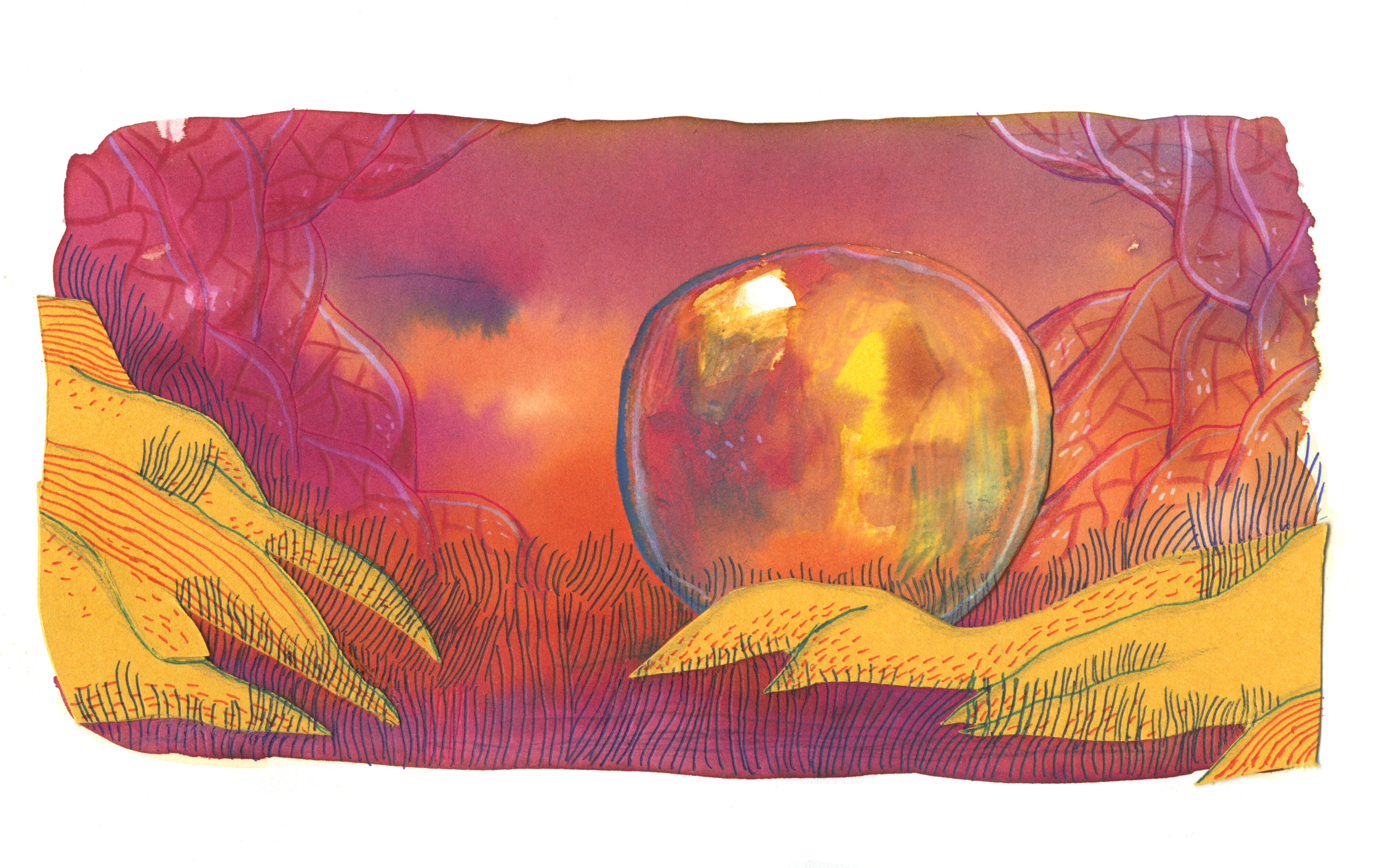
<img  style="border:0" src="/spotlight/images/sptlt114_2.jpg" height="566" width="400" alt="[‘<em>The Nose</em>’ ]" />
<p>"The Nose" by Theo Gerritsen, 2010</p>
<p></p>
<p>Courtesy of the artist</p>
<br>
</div>
<br>


<p>FPRs belong to the huge family of G-protein-coupled receptors and are lodged within a cell’s membrane. Like all odorant or non-odorant nasal receptors, FPRs are found on the surface of chemosensory neurons whose dendrites extend into the nasal epithelium. Each chemosensory neuron has its specific receptor – hence a certain type of FPR is only found on the membrane of a certain type of chemosensory neuron. Any amount of chemosensory neurons – on which are attached not only FPRs but also all the other hundreds of receptors – are activated continuously and the brain sums up all the different messages it receives, processes the information and then says how to behave, or not to behave. 

<div class="quoteright">
&#171;There have been intriguing stories of animals that can sense disease, if not death, in humans. &#187;
</div>

<p>No one is really sure what kind of molecules FPRs actually bind in noses. If these particular receptors are capable of informing a mouse that disease is nigh, what could be the chemical nature of the warning? Formyl peptides are possibly the answer. As in the common immune response, the nasal FPR ligands could also be formyl peptides of the kind secreted by foreign bodies once they have invaded an organism. But how could such ligands reach a rodents’ nose? An immune response typically occurs within an organism. One theory is that a sick animal may release some of the enemy formyl peptides in its bodily fluids, such as sweat or urine. Any animal in its close surroundings could then easily pick them up simply by sniffing. Likewise, spoiled food can also be detected by way of a whiff, and hence avoided.

<p>What is the point of being able to sniff out disease you might ask? The obvious answer is: avoidance. If and when an animal senses disease, the clear message is “keep your distance”. The motivation for such behaviour – more often than not completely unconscious – between members of the same species, for instance, is to protect it in the light of perpetuation. There have been intriguing stories of animals that can sense disease, if not death, in humans. One such story is that of Oscar, a young cat that haunts the corridors of an old people’s nursing home in Rhode Island (USA) and invariably curls up on the bed of a person who is dying. The fact that something as seemingly insignificant as a ‘scent’ can bring about a given behaviour, and how this happens, has fascinated scientists for decades. Much has been discovered, but an awful lot remains to be understood. Certainly, the more we seem to unravel, the more Nature is showing how infinitely fine-tuned she is. And it will take more than Man’s nose to perceive all its subtleties. 

<div class="blogfooter">
<dl><dt><strong>References</strong></dt>
<dd>1.	Liberles S.D., Horowitz L.F., Kuang D., Contos J.J., Wilson K.L., Siltberg-Liberles J., Liberles D.A., Buck L.B.
Formyl peptide receptors are candidate chemosensory receptors in the vomeronasal organ
PNAS 106:9842-9847(2009)
PMID:<a href="http://www.ncbi.nlm.nih.gov/entrez/query.fcgi?cmd=Retrieve&db=pubmed&dopt=Abstract&list_uids=19497865&query_hl=3&itool=pubmed_docsum">19497865</a>
</dd>
<dd>2.	Rivière S., Challet L., Fluegge D., Spehr M., Rodriguez I.
Formyl peptide receptor-like proteins are a novel family of vomeronasal chemosensors
Nature 459:574-577(2009)
PMID:<a href="http://www.ncbi.nlm.nih.gov/entrez/query.fcgi?cmd=Retrieve&db=pubmed&dopt=Abstract&list_uids=19387439&query_hl=3&itool=pubmed_docsum">19387439</a>
</dd>
<dd>3.	Dosa D.M.
A day in the life of Oscar the cat
New England Journal of Medicine 357:328-329(2007)
PMID:<a href="http://www.ncbi.nlm.nih.gov/entrez/query.fcgi?cmd=Retrieve&db=pubmed&dopt=Abstract&list_uids=17652647&query_hl=3&itool=pubmed_docsum">17652647</a>
</dd>
</dl>
</div>

]]>
      <![CDATA[<dt><strong><a href="http://www.uniprot.org/">UniProt</a> cross references</strong></dt>
<dd>Formyl peptide receptor-related sequence 1, <em>Mus musculus,</em> (Mouse) : <a href="http://www.uniprot.org/uniprot/O08790">O08790</a><br>
Formyl peptide receptor-related sequence 3, <em>Mus musculus,</em> (Mouse) : <a href="http://www.uniprot.org/uniprot/O88537">O88537</a><br>
Formyl peptide receptor-related sequence 4, <em>Mus musculus,</em> (Mouse) : <a href="http://www.uniprot.org/uniprot/A4FUQ5">A4FUQ5</a><br>
Formyl peptide receptor-related sequence 6, <em>Mus musculus,</em> (Mouse) : <a href="http://www.uniprot.org/uniprot/Q3SXG2">Q3SXG2</a><br>
Formyl peptide receptor-related sequence 7, <em>Mus musculus,</em> (Mouse) : <a href="http://www.uniprot.org/uniprot/Q71MR7">Q71MR7</a><br>
</dd>]]>
    </content>
  </entry>
  <entry>
    <title>mint condition</title>
    <link rel="alternate" type="text/html" href="http://www.expasy.org/spotlight/back_issues/sptlt113.shtml" />
    <modified>2010-01-22T17:50:37Z</modified>
    <issued>2010-01-21T16:38:07+01:00</issued>
    <id>tag:www.expasy.org,2010:/spotlight//2.766</id>
    <created>2010-01-21T15:38:07Z</created>
    <summary type="text/plain">It is very likely that mint – and its close cousin menthol – is one of the most popular flavours or sensations known worldwide. Is there any population left on Earth that hasn’t sucked a mint sweet or chewed on mint gum? Mint is drunk in beverages, and brushed onto teeth. Added to sauces, and put into chocolates. Smeared onto chests and added to paper handkerchiefs. Why is it that mint and menthol are found, one way or another, almost everywhere on this planet? Transport would be an obvious answer. But there is more to it than that. Besides the numerous health benefits, mint – and menthol – have a quality that is readily appreciated by many: freshness. This sensation is the legacy of two kindred proteins – P450 cytochromes – found in mint plants.</summary>
    <author>
      <name>Vivienne Baillie Gerritsen</name>
      
      <email>spotlight@isb-sib.ch</email>
    </author>
    <dc:subject>Article</dc:subject>
    <content type="text/html" mode="escaped" xml:lang="en" xml:base="http://www.expasy.org/spotlight/">
      <![CDATA[<p><b>It is very likely that mint – and its close cousin menthol – is one of the most popular flavours or sensations known worldwide. Is there any population left on Earth that hasn’t sucked a mint sweet or chewed on mint gum? Mint is drunk in beverages, and brushed onto teeth. Added to sauces, and put into chocolates. Smeared onto chests and added to paper handkerchiefs. Why is it that mint and menthol are found, one way or another, almost everywhere on this planet? Transport would be an obvious answer. But there is more to it than that. Besides the numerous health benefits, mint – and menthol – have a quality that is readily appreciated by many: freshness. This sensation is the legacy of two kindred proteins – P450 cytochromes – found in mint plants.</p></b>


  <div class="quoteleft">
&#171;Is there any population left on Earth that hasn't sucked on a mint sweet or chewed on mint gum?&#187;
</div>
 
<p>The virtues of mint plants have been appreciated for millennia, and like the great majority of medicinal herbs, the mint plant is named after a Greek mythological character: the nymph Minthe. Persephone was jealous of Pluto’s love for Minthe, so she promptly transformed her into a plant. Unfortunately, Pluto was not able to restore Minthe to her former state but assured her that she would not be forgotten since her fragrance would be distinctive and pleasant. Especially when she was trod upon… Minthe became a Mediterranean weed whose benefits were widely acknowledged. Dried mint leaves have been found in Egyptian tombs. The Romans used it extensively and introduced the plant to Great Britain on one of their visits. The British then introduced it to many parts of the world as they colonized different parts of it.  

<p>The two most popular mint plants are spearmint (<em>Mentha spicata</em>) and peppermint (<em>Mentha piperata</em>). Known for literally thousands of years, their essential oils are used to treat numerous ailments, such as headaches, indigestion, diarrhea, motion sickness, colds, gallstones and infections to name a few. What is it that does us so much good? The answer is menthol and carvone. Spearmint hosts the enzyme limonene-6-hydroxylase which is involved in the production of carvone – the chemical entity which gives the well-known spearmint flavour. The peppermint plant, on the other hand, hosts limonene-3-hydroxylase, the enzyme involved in the production of menthol. Both limonene hydroxylases belong to the large P450 cytochrome family whose members all have a central role in producing thousands of natural plant products amongst which the hundreds of oxygenated monoterpenes – to which belong carvone and menthol – that are the source of the aromas and flavours so particular to specific essential oils.   

<br>
<br>
<div class="blogimgcenter">
<img  style="border:0" src="/spotlight/images/sptlt113_2.jpg" height="267" width="400" alt="[‘<em>Mentha</em>’ ]" />
<p>Mentha</p>
<p>Fir0002/Flagstaffotos</p>
<p><a href="http://en.wikipedia.org/wiki/GNU_Free_Documentation_License">GNU Free Documentation License</a></p>
<br>
</div>
<br>

<p>Carvone and menthol are end products following the hydroxylation – by the spearmint and peppermint hydroxylases respectively  – of one same chemical entity: limonene. Limonene-6-hydroxylase hydroxylates limonene on C6 thus producing trans-carveol which is subsequ-ently modified to become carvone. Limonene-3-hydroxylase, however, hydroxylates limonene on its C3 thus producing trans-isopiperitenol which – five steps later – is modified to become menthol. The two enzymes are very similar, and their substrate binding sites very restrictive – a discovery which came as a surprise to scientists. Indeed while, as a rule, in the P450 cytochrome family any change of activity usually requires a certain number of mutations, only one mutation is needed to modify the limonene hydroxylases’ binding activity. 

<div class="quoteright">
&#171;It is so rare to be able to enjoy something with the knowledge that it is also good for you.&#187;
</div>

<p>This particular mutation converts a phenyl-alanine into an isoleucine in the sequence of the spearmint hydroxylase. Originally a limonene-6-hydroxylase, this phenylalanine to isoleucine mutation causes the spearmint enzyme to become a limonene-3-hydroxylase!  The spearmint enzyme is thus capable of synthesizing menthol like its cousin, the peppermint hydroxylase! Such a mutation points to the fact that these particular amino acids are not only essential but are most probably involved in the orientation of the substrate limonene within the binding pocket so that it is hydroxylated either at position C3, or position C6.

<p>Single mutations which are capable of changing so drastically a protein’s function are of great interest in the world of research. Not only do they point to very specific minute regions in a protein’s sequence, but they provide valuable information for the understanding of instances such as substrate binding, substrate orientation, pocket binding structure, enzyme function and metabolic pathways. Needless to say, they are of high biotechnological interest. In the case of the limonene-3- and limonene-6- hydroxylases for instance, the study implies that their substrate binding pockets must be small and pretty tight, and one mutation is capable of influencing substrate orientation in a very subtle way. Naturally, such studies are of great importance within the world of commerce for the yield of peppermint oil, for example, by way of the genetic engineering of <em>E.coli</em> or yeast. Nothing many of us would complain about; it is so rare to be able to enjoy something with the knowledge that it is also good for you.

<div class="blogfooter">
<dl><dt><strong>References</strong></dt>
<dd>1.	Schalk M:, Croteau R.
A single amino acid substitution (F363I) converts the regiochemistry of the spearmint (– )-limonene hydroxylase from a C6- to a C3-hydroxylase
PNAS 97:11948-11953(2000)
PMID:<a href="http://www.ncbi.nlm.nih.gov/entrez/query.fcgi?cmd=Retrieve&db=pubmed&dopt=Abstract&list_uids=11050228&query_hl=3&itool=pubmed_docsum">11050228</a>
</dd>
<dd>2.	Wust M., Little D.B., Schalk M., Croteau R.
Hydroxylation of limonene enantiomers and analogs by recombinant (– )-limonene 3- and 6-hydroxylases from Mint (Mentha) species: evidence for catalysis within sterically constrained active sites
Archives of Biochemistry and Biophysics 387:125-136(2001)
PMID:<a href="http://www.ncbi.nlm.nih.gov/entrez/query.fcgi?cmd=Retrieve&db=pubmed&dopt=Abstract&list_uids=11368174&query_hl=3&itool=pubmed_docsum">11368174</a>
</dd>
<dd>3.	Lupien S., Karp F., Wildung M., Croteau R.
Regiospecific cytochrome P450 limonene hydroxylases from Mint (Mentha) species : cDNA isolation, of (– )-4S-limonene 3-hydroxylase and (– )-4S-limonene 6-hydroxylase
Archives of Biochemistry and Biophysics 368:181-192(1999)
PMID:<a href="http://www.ncbi.nlm.nih.gov/entrez/query.fcgi?cmd=Retrieve&db=pubmed&dopt=Abstract&list_uids=10415126&query_hl=3&itool=pubmed_docsum">10415126</a>
</dd>
</dl>
</div>
]]>
      <![CDATA[<dt><strong><a href="http://www.uniprot.org/">UniProt</a> cross references</strong></dt>
<dd>Cytochrome P450 71D15, <em>Mentha piperita ,</em> (Peppermint) : <a href="http://www.uniprot.org/uniprot/Q9XHE6">Q9XHE6</a><br>
Cytochrome P450 71D18, <em>Mentha spicata ,</em> (Spearmint) : <a href="http://www.uniprot.org/uniprot/Q9XHE8">Q9XHE8</a><br>
</dd>]]>
    </content>
  </entry>
  <entry>
    <title>String of intrusion</title>
    <link rel="alternate" type="text/html" href="http://www.expasy.org/spotlight/back_issues/sptlt112.shtml" />
    <modified>2010-01-07T10:01:21Z</modified>
    <issued>2009-12-21T14:46:29+01:00</issued>
    <id>tag:www.expasy.org,2009:/spotlight//2.762</id>
    <created>2009-12-21T13:46:29Z</created>
    <summary type="text/plain">When I was little, I used to wear little cotton shirts that were knitted by my grandmother. So? Well, onto them she sewed tiny nacre buttons you could never get hold of and which mesmerized me because of the different colours that shone off them depending on how you oriented them in the light. You can still find these buttons today but plastic ones have almost completely replaced them – and some even try to copy the lustre which is so particular to mother of pearl. What is it that makes pearl what it is known for? Aragonite. Aragonite is a calcium carbonate mineral and, very recently, scientists discovered a complex of three proteins in the pearl oyster Pinctada fucata, which seems to be at the heart of aragonite formation and orientation, and hence the famous sheen. </summary>
    <author>
      <name>Vivienne Baillie Gerritsen</name>
      
      <email>spotlight@isb-sib.ch</email>
    </author>
    <dc:subject>Article</dc:subject>
    <content type="text/html" mode="escaped" xml:lang="en" xml:base="http://www.expasy.org/spotlight/">
      <![CDATA[<p><b>When I was little, I used to wear small cotton shirts that were knitted by my grandmother. So? Well, onto them she sewed tiny nacre buttons you could never get hold of and which mesmerized me because of the different colours that shone off them depending on how you oriented them in the light. You can still find these buttons today but plastic ones have almost completely replaced them – and some even try to copy the lustre which is so particular to mother of pearl. What is it that makes pearl what it is known for? Aragonite. Aragonite is a calcium carbonate mineral and, very recently, scientists discovered a complex of three proteins in the pearl oyster <em>Pinctada fucata</em>, which seems to be at the heart of aragonite formation and orientation, and hence the famous sheen. </p></b>

  <div class="quoteleft">
&#171;Because of their singular shine, pearl beads have been hunted for thousands of years in many different seas and appear in as many sacred rites.&#187;
</div>

<p>The use of pearls is not particular to the 20th century and aristocracy. Because of their singular shine, pearl beads have been hunted – insofar as one can hunt a mollusc… – for thousands of years in many different seas and appear in as many sacred rites. Hindu scriptures suggest powdered mother of pearl as a stimulant of digestion or to treat mental ailments. And Marco Polo recounted that the King of Malabar – a region in southern India – wore 108 rubies and as many precious pearls around his neck. This singular necklace was transmitted from generation to generation. Why 108? Because the King of Malabar had to say 108 prayers at dawn, and another 108 at dusk. 

<p>Before the 20th century, it took a long time to find the perfect pearl. Over the centuries, millions of molluscs have been pried open and subsequently killed by divers eager to find the precious gem and gain as much money as possible. The bigger and rounder, the better. But such pearls are very rare – because they are natural and the result of a benign accident. Indeed, the origin of a natural pearl is an irritant which has ended up in the soft tissue of a mollusc – a grain of sand, a small organism or even part of the mollusc’s own shell which has broken off. As a means of defence, the mollusc traps the foreign body in a shell of aragonite – a slow process but a process which ultimately leads to the formation of a pearl. So what some like to decorate their necks with is in fact the result of an intrusion. There’s a thought. 

<br>
<br>
<div class="blogimgcenter">
<img  style="border:0" src="/spotlight/images/sptlt112.jpg" height="572" width="400" alt="[‘<em>The girl with the pearl earring (1665)</em>’ ]" />
<p>The girl with the pearl earring (1665)
<br>by Johannes Vermeer</p>
<p>Source: <a href="http://en.wikipedia.org/wiki/File:Johannes_Vermeer_(1632-1675)_-_The_Girl_With_The_Pearl_Earring_(1665).jpg">Wikipedia</a></p>
<br>
</div>
<br>

<p>It wasn’t until the very early 1900s, that Thomas Henry Huxley – the man who dealt with the promotion of Darwin’s theory of evolution – sent William Saville Kent, an English marine biologist, to Australia. The marine biologist promptly devised a way of cultivating pearls by introducing an irritant into the soft tissue of molluscs, and he passed the information onto Japanese fellow workers. Pearl culture has prospered ever since, to become almost commonplace, yet it is still a difficult task to make a perfectly round pearl. 

<div class="quoteright">
&#171;It is an intriguing thought to realise that a pearl only exists because an oyster is invonvenienced one way or another.&#187;
</div>


<p>But how is the stuff of pearl made? Shell and nacre are made out of organic matter, mainly chitin, and two different forms of calcium carbonate. The outer shell of a mollusc is made out of the mineral calcite which grows in prisms; it is very strong and stable. Nacre is made out of the mineral aragonite, an alternate form of calcium carbonate, very tough but less stable than calcite; it grows in platelets and lines the inner side of the mollusc’s shell and has this singular lustre. How the switch from the prisms to the platelets occurs remains a mystery to date. But a newly discovered protein complex is at the heart of the formation of the aragonite platelets, and hence the stuff we call “pearl”.

<p>The complex is made out of three proteins, known as the Pif complex in which is found pearlin, Pif80 and Pif97. Pif80 and 97 are part of the same sequence which is subsequently cleaved into two. A complex of both is then formed in the soft tissue epithelial cells and secreted where Pif97 seems to bind to chitin microfibrils – the organic part of pearl – and pearlin, thus forming a larger aggregate which, in turn, binds to other proteins. All this contributes to the lamellar sheeting of aragonite. Within such sheets, Pif80 – by way of its many asparagine residues – binds to calcium car-bonate and not only elicits aragonite crystal formation but also has a role in the orientation of the aragonite crystals. This leads to the nacreous layer we all admire when opening an oyster. Some of you may even have come across the lone natural pearl… Usually deceptively small. 

<p>Many organisms know how to make inorganic material – bone, teeth, exoskeletons, shells – which is, in itself, amazing. No stone could make anything organic… It is all in the name of keeping our parts together or protecting them. And it is something materials engineers envy. A greater knowledge of how biomineralization occurs would enable the synthesis of high performance composite materials. Yet again, Nature shows its varied activities and power. And is it not an intriguing thought to realise that a pearl only exists because an oyster is inconvenienced one way or another? And that such an inconvenience can become something so becoming on the end of an ear lobe?

<div class="blogfooter">
<dl><dt><strong>References</strong></dt>
<dd>1.	Suzuki M., Saruwatari K., Kogure T., Yamamoto Y., Nishimura T., Kato T., Nagasawa H.
An acidic matrix protein, Pif, is a key macromolecule for nacre formation
Science 325:1388-1390(2009)
PMID:<a href="http://www.ncbi.nlm.nih.gov/entrez/query.fcgi?cmd=Retrieve&db=pubmed&dopt=Abstract&list_uids=19679772&query_hl=3&itool=pubmed_docsum">19679772</a>
</dd>
<dd>2.	Kröger N.
The molecular basis of nacre formation
Science 325:<a href="http://www.ncbi.nlm.nih.gov/pubmed/19679772?itool=EntrezSystem2.PEntrez.Pubmed.Pubmed_ResultsPanel.Pubmed_RVAbstract">1351-1352(2009)</a>
</dd>
</dl>
</div>


]]>
      <![CDATA[<dt><strong><a href="http://www.uniprot.org/">UniProt</a> cross references</strong></dt>
<dd>Pearlin, <em>Pinctada fucata,</em> (Pearl oyster) : <a href="http://www.uniprot.org/uniprot/O97048">O97048</a><br>
Pif80, <em>Pinctada fucata,</em> (Pearl oyster) : <a href="http://www.uniprot.org/uniprot/C7G0B5">C7G0B5</a><br>
Pif97, <em>Pinctada fucata,</em> (Pearl oyster) : <a href="http://www.uniprot.org/uniprot/C7G0B5">C7G0B5</a><br>
</dd>]]>
    </content>
  </entry>
  <entry>
    <title>Darwin&apos;s dessert</title>
    <link rel="alternate" type="text/html" href="http://www.expasy.org/spotlight/back_issues/sptlt111.shtml" />
    <modified>2009-11-26T14:36:40Z</modified>
    <issued>2009-11-26T15:04:02+01:00</issued>
    <id>tag:www.expasy.org,2009:/spotlight//2.759</id>
    <created>2009-11-26T14:04:02Z</created>
    <summary type="text/plain">Charles Darwin has been resting in Westminster Abbey since April 1882 and scientists have been wondering ever since what it was that he suffered from for most of his adult life. It is a well-known fact that the famous naturalist steered clear of many official gatherings and was barely able to defend his theory of evolution because of chronic ailments of all sorts which kept him from being the sociable man he may otherwise have been. Many have thought that the origin of his various complaints – which were as diverse as vomiting, severe headaches, palpitations, eczema and flatulence – were purely psychosomatic. Others have suggested that Darwin must have been afflicted by some kind of illness such as Chagas’ disease or, more recently, Crohn’s disease. What everyone seems to agree upon though is that Darwin was definitely suffering from a form of gastrointestinal disorder which may well have involved an inherited lactose intolerance. Lactose intolerance is brought about by the lack of the enzyme lactase which breaks down lactose, thus making it digestible. </summary>
    <author>
      <name>Vivienne Baillie Gerritsen</name>
      
      <email>spotlight@isb-sib.ch</email>
    </author>
    <dc:subject>Article</dc:subject>
    <content type="text/html" mode="escaped" xml:lang="en" xml:base="http://www.expasy.org/spotlight/">
      <![CDATA[<p><b>Charles Darwin has been resting in Westminster Abbey since April 1882 and scientists have been wondering ever since what it was that he suffered from for most of his adult life. It is a well-known fact that the famous naturalist steered clear of many official gatherings and was barely able to defend his theory of evolution because of chronic ailments of all sorts which kept him from being the sociable man he may otherwise have been. Many have thought that the origin of his various complaints – which were as diverse as vomiting, severe headaches, palpitations, eczema and flatulence – were purely psychosomatic. Others have suggested that Darwin must have been afflicted by some kind of illness such as Chagas’ disease or, more recently, Crohn’s disease. What everyone seems to agree upon though is that Darwin was definitely suffering from a form of gastrointestinal disorder which may well have involved an inherited lactose intolerance. Lactose intolerance is brought about by the lack of the enzyme lactase which breaks down lactose, thus making it digestible.</p></b> 

  <div class="quoteleft">
&#171;Darwin's theory of evolution - “On the Origin of Species” - was first published on November 24th, 1859. Almost exactly 150 years ago.&#187;
</div>
 
<p>Lactose is a sugar and found in notable quantities in milk. Many humans – almost half of the world population – lose the ability to digest lactose during their childhood or in early adulthood, and hence become lactose intolerant. Common symptoms are stomach pains, diarrhea and flatulence, which are easily dealt with by avoiding dairy products.  The capacity to digest lactose, however, does persist in a number of populations, namely Northern Europeans. It is thought that this may have something to do with the beginnings of domestication and farming which took place in that part of the world about 10’000 years ago – although it is a very short time to account for the acquisition of a genetic trait. One other form of lactose intolerance is genetic – and known as congenital lactase deficiency. This is far more serious than the usually mild acquired intolerance to lactose which follows weaning, and can cause the death of newborns unless it is rapidly diagnosed. 

<p>Lactose is a source of energy. The enzyme lactase breaks it down to galactose and glucose – two other sugars – in the small intestine. Lactase is found in the brush border of the small intestine. While one part of it is lodged in the epithelial cell membrane, another protrudes into the intestinal lumen, ready to catch lactose which has been ingested. The enzyme itself seems to be expressed only shortly before the end of term, ready to digest lactose when the newborn drinks its mother’s milk. Then, in more than half of the human population, lactase expression declines during childhood causing a perfectly benign intolerance to lactose, and thus dairy products. Although there seems to remain sufficient lactase to deal with up to 250 ml of whole milk per day. 

<br>
<br>
<div class="blogimgcenter">
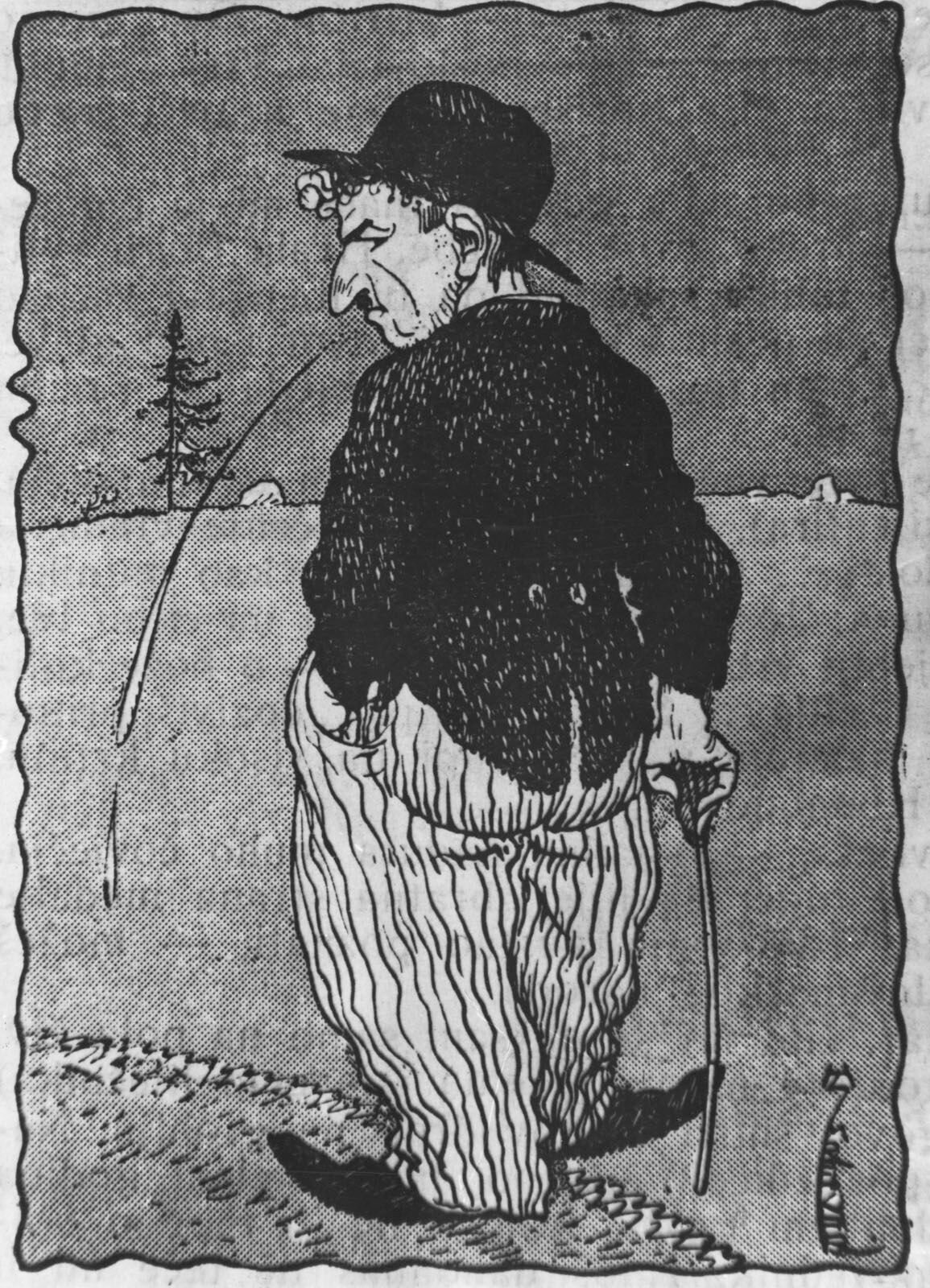
<img  style="border:0" src="/spotlight/images/sptlt111.jpg" height="480" width="302" alt="[‘<em>Charles Darwin</em>’ ]" />
<p>Caricature of Charles Darwin
<br>La Petite Lune (Paris, 1880s)</p>
<p>Source: <a href="http://commons.wikimedia.org/wiki/File:Darwin_as_monkey_on_La_Petite_Lune.jpg">Wikipedia</a></p>
<br>
</div>
<br>

<p>The molecular factors which trigger off, or hinder the process of, lactose intolerance in childhood or early adulthood are still unknown. But it seems that lactase expression is brought to a halt after transcription. Consequently, the lactase is not delivered to the small intestine or perhaps simply incapable of inserting itself in the epithelial membrane. In the case of congenital lactase deficiency, however, it seems that the enzyme’s structure is modified and, as a consequence, the lactase cannot bind lactose and, hence, cannot break it down. 

<div class="quoteright">
&#171;Charles Darwin was barely able to defend his theory of evolution because of chronic ailments of all sorts which kept him from being the sociable man he may otherwise have been.&#187;
</div>

<p>A number of researchers believe that Darwin may not have benefited from the persistence of lactose breakdown into adulthood. There could be a number of reasons for it. It could have been hereditary. Many members of the Darwin family suffered from ailments such as those described by Darwin himself in his ‘Diary of Health’ – although to a lesser degree. What is more, Darwin loved rich food. As mentioned by his wife Emma, desserts rich with cream and eggs were a favourite. And when the naturalist was put onto dairy free diets, his health improved. What is more, fatigue, doubt and depression – which were three close companions of the author of the theory of evolution – could have also kindled physical symptoms, and the regular ingestion of potions such as arsenic, bismuth, amyl nitrite, morphine, quinine and calomel in an attempt to soothe his pains cannot have helped. Darwin was also acutely ill on the Beagle. Some believe he could have been infected by <em>Trypanosoma cruz</em> which is found in the excrement of a famous Pampas bug, <em>Triatoma infestans</em>. One of which had become a “pet” on board the Beagle… <em>Trypanosoma cruz</em> infects the small intestine – amongst other organs – which would have struck yet another blow to Darwin’s already weak tolerance to lactose. 

<p>One way to find out whether Darwin really suffered from inherited lactose intolerance would be to exhume his remains and have a look at his DNA. But no one at Westminster Abbey wants to do this. And, besides trying to understand what it is the great naturalist suffered from, rummaging around his DNA would not lead to groundbreaking revelations that would contribute to the rapid diagnosis of congenital lactase deficiency in newborns for instance. Indeed, DNA-based diagnoses need to be developed to replace current clinical tests which are slow. Understanding the molecular processes involved in lactase expression and hence lactose intolerance or persistence is also of great biological interest, as are the recent and seemingly rapid evolutionary forces involving lactase regulation in humans. Something Darwin would no doubt have gladly looked into.

<div class="blogfooter">
<dl><dt><strong>References</strong></dt>
<dd>1.	Jarvely I., Torniainen S., Kolho K.-L.
Molecular genetics of human lactase deficiencies
Annals of Medicine 41:568-575(2009)
PMID:<a href="http://www.ncbi.nlm.nih.gov/entrez/query.fcgi?cmd=Retrieve&db=pubmed&dopt=Abstract&list_uids=19639477&query_hl=3&itool=pubmed_docsum">19639477</a>
</dd>
<dd>2.	Sheehan W., Meller W.H., Thurber S.
More on Darwin’s illness: Comment on the final diagnosis of Charles Darwin
Notes & Records of the Royal Society 62:205-209(2008)
PMID:<a href="http://www.ncbi.nlm.nih.gov/entrez/query.fcgi?cmd=Retrieve&db=pubmed&dopt=Abstract&list_uids=19069001&query_hl=3&itool=pubmed_docsum">19069001</a>
</dd>
<dd>3.	Campbell A.K., Matthews S.B.
Darwin’s illness revealed
Postgraduate medical journal 81:248-251(2005)
PMID:<a href="http://www.ncbi.nlm.nih.gov/entrez/query.fcgi?cmd=Retrieve&db=pubmed&dopt=Abstract&list_uids=15811889&query_hl=3&itool=pubmed_docsum">15811889</a>
</dd>
</dl>
</div>

 
]]>
      <![CDATA[<dt><strong><a href="http://www.uniprot.org/">UniProt</a> cross references</strong></dt>
<dd>Lactase-phlorizin hydrolase, <em>Homo sapiens,</em> (Human) : <a href="http://www.uniprot.org/uniprot/P09848">P09848</a><br>
</dd>]]>
    </content>
  </entry>
  <entry>
    <title>in like a shot</title>
    <link rel="alternate" type="text/html" href="http://www.expasy.org/spotlight/back_issues/sptlt110.shtml" />
    <modified>2009-12-07T13:36:14Z</modified>
    <issued>2009-10-19T13:47:59+01:00</issued>
    <id>tag:www.expasy.org,2009:/spotlight//2.756</id>
    <created>2009-10-19T11:47:59Z</created>
    <summary type="text/plain">Making use of a tubular structure to inject something into something else is a widespread practice. Doctors use syringes to inject medicine into patients. Mammals use their reproductive organ to supply their female counterparts with semen. Wasps use their sting to insert venom into their enemy. And Encephalitozoon cuniculi uses a polar tube as a means to infect. E.cuniculi infects species throughout the animal kingdom. It does this by inserting a long tube into the host cell’s membrane and injecting directly into the cytoplasm what it needs to proliferate. E.cuniculi is a parasitic unicellular eukaryote and thus cannot survive on its own. But the pathogen has to be able to recognise its host first. Scientists have discovered one protein – known as ‘spore wall and anchoring disk complex protein EnP1’ – which is found in the area from where the polar tube is thrust, and which is capable of binding to surface molecules on the host cell’s membrane. Thus creating the cell to cell contact needed to trigger off infection.</summary>
    <author>
      <name>Vivienne Baillie Gerritsen</name>
      
      <email>spotlight@isb-sib.ch</email>
    </author>
    <dc:subject>Article</dc:subject>
    <content type="text/html" mode="escaped" xml:lang="en" xml:base="http://www.expasy.org/spotlight/">
      <![CDATA[<p><b>Making use of a tubular structure to inject something into something else is a widespread practice. Doctors use syringes to inject medicine into patients. Mammals use their reproductive organ to supply their female counterparts with semen. Wasps use their sting to insert venom into their enemy. And <em>Encephalitozoon cuniculi</em> uses a polar tube as a means to infect. <em>E.cuniculi</em> infects species throughout the animal kingdom. It does this by inserting a long tube into the host cell’s membrane and injecting directly into the cytoplasm what it needs to proliferate. <em>E.cuniculi</em> is a parasitic unicellular eukaryote and thus cannot survive on its own. But the pathogen has to be able to recognise its host first. Scientists have discovered one protein – known as ‘spore wall and anchoring disk complex protein EnP1’ – which is found in the area from where the polar tube is thrust, and which is capable of binding to surface molecules on the host cell’s membrane. Thus creating the cell to cell contact needed to trigger off infection.</p></b>


  <div class="quoteleft">
&#171;The notion of <em>E.cuniculi</em> inserting its insides into a host cell does not sound like ground-breaking news, since many tiny creatures have devised ways to inject their DNA into hosts with an end to multiply.&#187;
</div>
 
 
<p>Why is it that <em>E.cuniculi</em> cannot survive on its own? Researchers are still not sure whether microsporidia are highly primitive organisms, or indeed far more advanced than believed. The fact remains, however, that <em>E.cuniculi</em> has no mitochondrion and thus cannot provide itself with the energy it needs. So its only option is to live at the expense of another organism. The notion of <em>E.cuniculi</em> inserting its insides into a host cell does not sound like ground-breaking news, since many tiny creatures have devised ways to inject their DNA into hosts with an end to multiply. The surprising fact with <em>E.cuniculi</em> though – and its fellow microsporidia – is that, to date, no one has ever seen any other unicellular eukaryote infect by way of a tube. Many infectious microorganisms use endocytosis to move substances from one cell to another for instance. This said, some scientists think that the polar tube could have been formed by the aggregation – many years ago – of two or more original vacuoles. 

<p>Like all microsporidia, <em>E.cuniculi</em> goes through a number of stages before it becomes a spore and is ready to infect. A full grown spore is surrounded by a rigid wall which protects the protist from the extracellular environment. The wall is made up of an outside layer, known as the exospore whose main constituent is protein, and an inner layer known as the endospore, whose major constituent is chitin, which surrounds the protist’s plasma membrane. At one end of <em>E.cuniculi</em> is a thickened area – the anchoring disk – onto which is moored one end of the polar tube. The polar tube is long and one very practical way to fit into the space it has been given is to coil it, as many as thirty times! When <em>E.cuniculi</em> is ready to attack, the bit of wall situated where the polar tube is attached breaks down and the tube inserts itself into the host’s membrane. While whether it does this by brute force or a more subtle mechanism is unknown, the fact remains that the inside of <em>E.cuniculi</em> is then propelled through the tube and shot into the host’s cytoplasm. 

<br>
<br>
<div class="blogimgcenter">
<img  style="border:0" src="/spotlight/images/sptlt110.jpg" height="337" width="350" alt="[‘<em>Purple Glove</em>’ ]" />
<p>'Purple Glove' 1986 , oil on linen, 48" X 48" 
<br>by <a href="http://www.ilonasochynsky.com/">Ilona Sochynsky</a></p>
<br>
<p>Collection of Dr. Walter Hoydysh
<br>Courtesy of the owner</p> 
</div>
<br>
<p>In order for <em>E.cuniculi</em> to infect its prey, a number of events must take place. The protist has to recognise its host. It has to get close to it, if not bind to it. And then it has to trigger off the process which will have its sporoplasm poured into the host’s cytoplasm. In fact, it is  highly probable that all these events are dependent on one another, and EnP1 may well have a central role. This particular protein is not only found in <em>E.cuniculi</em>’s endospore but also its exospore, and, more interestingly, at high concentrations in the vicinity of the anchoring disk. What is more, EnP1 is very likely to recognise and bind to glycosaminoglycans on the host’s cell surface thus bringing both cells into contact. 

<div class="quoteright">
&#171;While whether the polar tube inserts itself into the host's membrane by brute force or a more subtle mechanism is unknown, the fact remains that the inside of <em>E.cuniculi</em> is propelled through the tube and shot into the host's cytoplasm.&#187;
</div>

<p>How does EnP1 recognise glycosaminoglycans on a host’s cell surface? The EnP1 sequence is full of domains known as heparin-binding domains. These are domains which are known to bind to glycosaminoglycans. With EnP1 highly expressed at the anchoring disk, there is a fair chance that it will recognise glycosaminoglycans present on another cell’s membrane thus bringing the two cells closer to one another and perhaps even orienting the anchoring disk in such a way that the polar tube has all its chances to be fired properly. Recognition and adherence could in turn activate infection per se and what seems to be an explosive reaction – brought on by a very high osmotic pressure – where the polar tube literally crashes through the host’s membrane as it evaginates much in the same way as you would reverse a glove’s finger.

<p>Besides EnP1’s role in the process of polar tube evagination and the onset of infection, this adherence protein also probably has a structural role in the spore. EnP1’s heparin-binding motifs not only recognise external glycosamino-glycans, but they can also bind to the chitin-related glycosaminoglycan entities in the endospore. This would help to make the spore wall rigid. Furthermore, EnP1 is riddled with cysteine residues making it more than likely that there are numerous inter- and intra-EnP1 cysteine bridges which would help to make the spore wall even more solid.

<p>The very first description of the polar tube dates back to the late 1800s and was made by a marine scientist, Henneguya Thélohan, who was studying freshwater fish in Chad. Little did he know that he had depicted an organelle that was quite a singular occurrence in protists. What is more, over 100 years later, scientists have discovered EnP1, intimately involved with the evagination of the polar tube and which does seem to be essential not only in spore formation but also in host adherence and infection. Aiming antibodies against EnP1 should stop cell adherence and hence infection; EnP1, on the other hand, could also be used to develop vaccines. However, further studies are still needed to understand the mechanisms in detail so that scientists can find ways to treat microsporidiosis – an illness which afflicts many people whose immune system is weak, such as HIV positive patients or patients who have to take immunosuppressive drugs following tissue transplant. 

<div class="blogfooter">
<dl><dt><strong>References</strong></dt>
<dd>1.	Southern T.R., Jolly C.E., Lester M.E., Hayman J.R.
EnP1, a microsporidian spore wall protein that enable spores to adhere to and infect host cells in vitro.
Eukaryotic Cell 6:1354-1362(2007)
PMID:<a href="http://www.ncbi.nlm.nih.gov/entrez/query.fcgi?cmd=Retrieve&db=pubmed&dopt=Abstract&list_uids=17557882&query_hl=3&itool=pubmed_docsum">17557882</a>
</dd>
<dd>2.	Weiss L.M., Xu Y.
The microsporidian polar tube: a highly specialised invasion organelle.
International Journal for Parasitology 35:941-953(2005)
PMID:<a href="http://www.ncbi.nlm.nih.gov/entrez/query.fcgi?cmd=Retrieve&db=pubmed&dopt=Abstract&list_uids=16005007&query_hl=3&itool=pubmed_docsum">16005007</a>
</dd>
<dd>3.	Taupin V. Méténier G., Delbac F., Vivarès C.P., Prensier G.
Expression of two cell wall proteins during the intracellular development of <em>Encephalitozoon cuniculi</em>: an immunocytochemical and in situ hybridization study with ultrathin frozen sections.
International Journal for Parasitology 35:941-953(2005)
PMID:<a href="http://www.ncbi.nlm.nih.gov/entrez/query.fcgi?cmd=Retrieve&db=pubmed&dopt=Abstract&list_uids=16469199&query_hl=3&itool=pubmed_docsum">16469199</a>
</dd>
</dl>
</div>

]]>
      <![CDATA[<dt><strong><a href="http://www.uniprot.org/">UniProt</a> cross references</strong></dt>
<dd>Spore wall and anchoring disk complex protein EnP1, <em>Encephalitozoon cuniculi,</em> (Microsporidian parasite)  : <a href="http://www.uniprot.org/uniprot/Q8SWL3">Q8SWL3</a><br>
</dd>]]>
    </content>
  </entry>
  <entry>
    <title>another dark horse</title>
    <link rel="alternate" type="text/html" href="http://www.expasy.org/spotlight/back_issues/sptlt109.shtml" />
    <modified>2009-09-21T13:32:51Z</modified>
    <issued>2009-09-17T11:52:14+01:00</issued>
    <id>tag:www.expasy.org,2009:/spotlight//2.751</id>
    <created>2009-09-17T09:52:14Z</created>
    <summary type="text/plain">Life is sustained thanks to a continuous flow of chemistry within cells and between cells. Molecules of all shapes and sizes are being scooped up, modified, and released – albeit in a different form – to produce fuel, trigger off a metabolic process or indeed put an end to one, act as a messenger or simply become waste product. Until fairly recently, lactate was thought to be just that: a dead-end by-product following muscular effort for example. And for many a year, it was stashed away in the backs of minds as something which had no future. But it does. In the past decade or so, scientists have discovered that lactate has a life after all; it is not only being shuttled inside a cell but also from cell to cell, and may well have a role in telling our brain when a muscle is tired, or helping us to perceive muscular pain. As for most chemical entities, there are always proteins involved in binding to them, breaking them down or adding something onto them. One enzyme in particular is directly involved in lactate’s career: lactate dehydrogenase, or LDH.</summary>
    <author>
      <name>Vivienne Baillie Gerritsen</name>
      
      <email>spotlight@isb-sib.ch</email>
    </author>
    <dc:subject>Article</dc:subject>
    <content type="text/html" mode="escaped" xml:lang="en" xml:base="http://www.expasy.org/spotlight/">
      <![CDATA[<p><b>Life is sustained thanks to a continuous flow of chemistry within cells and between cells. Molecules of all shapes and sizes are being scooped up, modified, and released – albeit in a different form – to produce fuel, trigger off a metabolic process or indeed put an end to one, act as a messenger or simply become waste product. Until fairly recently, lactate was thought to be just that: a dead-end by-product following muscular effort for example. And for many a year, it was stashed away in the backs of minds as something which had no future. But it does. In the past decade or so, scientists have discovered that lactate has a life after all; it is not only being shuttled inside a cell but also from cell to cell, and may well have a role in telling our brain when a muscle is tired, or helping us to perceive muscular pain. As for most chemical entities, there are always proteins involved in binding to them, breaking them down or adding something onto them. One enzyme in particular is directly involved in lactate’s career: lactate dehydrogenase, or LDH.</p></b>

  <div class="quoteleft">
&#171;Until recently, it was widely believed that lactate had no life to speak of and it had been lying for the best part of two centuries in the dark corners of minds and laboratories.&#187;
</div>

 
<p>The study of lactate metabolism dates as far back as the 1700s when it was first isolated in 1780 by the Swedish chemist Karl Wilhelm Scheele (1742-1786) – a scientist who was in the habit of tasting what he had discovered, and may well have died at the early age of 43 because he licked a little too much mercury… Jöns Jacob Berzelius (1779-1848), yet another Swedish chemist and the man who coined the term ‘protein’ in 1816, offered the beginnings of an understanding of lactate metabolism. He was the first to observe that lactate accumulated following intensive activity. This was seen as a sort of passive poisoning of the body which brought on exhaustion. As a consequence, lactate’s role was not seen as a constructive one and, for the best part of 200 years, it was considered a waste product. However, in the past few years, scientists have shown that lactate is not just a useless by-product of exercise but that it is actually a mobile metabolite, able to move within a cell, travel from cell to cell, and even extend its travellings to other organs.  

<p>Lactate dehydrogenase, LDH, is the key enzyme in lactate production. It can make pyruvate from lactate, or lactate from pyruvate, with the concomitant production of NADH or NAD+. And when concentrations of lactate are high – as in intense exercise for instance – the excess lactate creates a negative feedback on LDH, thereby decreasing its activity. Present in all kingdoms, LDH has many isoforms, which are all tetramers of two different kinds of subunit: the H (from heart) subunit, or the M (muscle) subunit. It is the combination of these subunits which give a specific LDH its properties. Typically, tetramers of M subunits only have a turnover which is twice that of tetramers made up solely of H subunits. Similarly, their levels of inhibition are also different as are their substrate affinity and enzyme activity. This said, the greatest structural differences between LDH isozymes are not those observed between species but those that occur when LDH undergoes various conformational changes during catalysis. 

<br>
<br>
<div class="blogimgcenter">
<img  style="border:0" src="/spotlight/images/sptlt109.jpg" height="333" width="400" alt="[‘<em>LDH and the Rossmann fold</em>’ ]" />
<p>LDH monomer, illustrating two Rossmann folds, </p>
<p>hand-drawn by the late Audrey Rossmann (ref.3)</p>
<br>
<p>Courtesy of Prof. Michael G. Rossmann</p> 
</div>
<br>

<p>One of the first LDH structures to be defined was solved in the 1970s by Michael Rossmann, a German-American physicist and microbiologist. He also observed a particular fold in the enzyme where three parallel &#946;-strands enclose two &#945;-helices (BABAB) – a conformation now known as the Rossmann fold – and which occurs very frequently in protein sequences. In those days, computer programs which could predict the 3D structures of proteins and readily produce an image were unheard of. Everything was done by hand. Calculations and illustrations alike. The first hand drawn ‘cartoon’ sketches of proteins, or indeed parts of proteins, were beginning to emerge with ribbons, cylinders and arrows used to illustrate recurrent structures. Michael Rossmann’s wife, Audrey Rossmann was one of the first to make ink sketches of the structure of LDH, amongst which the Rossmann fold.  

<div class="quoteright">
&#171;In the 1970s, computer programs which could predict the 3D structures of proteins and readily produce an image were unheard of. Everything was done by hand. Calculations and illustrations alike.&#187;
</div>

<p>In the 1970s, it was still widely believed that lactate had no life to speak of and it had been lying for the best part of two centuries in the dark corners of minds and laboratories. But in the late 1980s, scientists were beginning to realise that there was more to this molecule than met the eye. It was becoming clear that lactate acts a little like a pseudo-hormone – it seems to have the ability to signal a state of stress to the central nervous system following intensive muscular activity. Such a signal is then translated into a sensation of pain, so that exercise is reduced or stopped, and the body can recuperate. All in all, lactate could well be a metabolite with an aim to protect, able to send out a “Give yourself a break” warning signal.

<p>LDH is then part of a fundamental metabolic process: one which gives an organism the means to dialogue between cells, between tissues and between organs. Without this sort of communication – where molecules are shuttling back and forth, triggering off metabolic processes and inhibiting others – life is not possible. LDH is by far not what defines life but it certainly is part of the hugely complex network which makes up the fabric of life. What is more, other roles for lactate are also emerging. It could have a role in the selection of fuel used by a cell for instance, and may also increase muscle contractility. The level of LDH is also measured by doctors nowadays because high levels can indicate the existence of internal tissue breakdown, a cardiac arrest, tumours or meningitis for example. LDH, and its substrate lactate, are just one example of something put aside as uninteresting simply because the time is not right. It’s a law of life. As it is a law of research. Only the ready mind can see.

<div class="blogfooter">
<dl><dt><strong>References</strong></dt>
<dd>1.	Philp A., Macdonald A.L., Watt P.W.
Lactate – a signal coordinating cell and systemic function
Journal of Experimental Biology 208:4561-4575(2005)
PMID:<a href="http://www.ncbi.nlm.nih.gov/entrez/query.fcgi?cmd=Retrieve&db=pubmed&dopt=Abstract&list_uids=16326938&query_hl=3&itool=pubmed_docsum">16326938</a>
</dd>
<dd>2.	Gladden L.B.
A “lactatic” perspective on metabolism
Medecine & Science in Sports & Exercise 40:477-485(2008)
PMID:<a href="http://www.ncbi.nlm.nih.gov/entrez/query.fcgi?cmd=Retrieve&db=pubmed&dopt=Abstract&list_uids=18379210&query_hl=3&itool=pubmed_docsum">18379210</a>
</dd>
<dd>3.	Holbrook J.J., Liljas A., Steindel S.J., Rossmann M.G.
Lactate dehydrogenase
Book: “The Enzymes”, 3rd edition, Vol. XI, Boyer P.D. Ed., Academic Press, New York, pp. 191-292, 1975
</dd>
</dl>
</div>

]]>
      <![CDATA[<dt><strong><a href="http://www.expasy.org/sprot/">Swiss-Prot</a> cross references</strong></dt>
<dd>L-lactate dehydrogenase B (LDH heart subunit), <em>Homo sapiens,</em> (Human)  : <a href="http://www.uniprot.org/uniprot/P07195">P07195</a><br>
L-lactate dehydrogenase A (LDH muscle subunit), <em>Homo sapiens,</em> (Human)  : <a href="http://www.uniprot.org/uniprot/P00338">P00338</a><br>
</dd>]]>
    </content>
  </entry>
  <entry>
    <title>paint my thoughts</title>
    <link rel="alternate" type="text/html" href="http://www.expasy.org/spotlight/back_issues/sptlt108.shtml" />
    <modified>2009-08-24T10:19:01Z</modified>
    <issued>2009-08-24T11:20:34+01:00</issued>
    <id>tag:www.expasy.org,2009:/spotlight//2.748</id>
    <created>2009-08-24T09:20:34Z</created>
    <summary type="text/plain">Drawing is probably not a talent the layman would normally associate with Science. Yet it has been an essential ingredient in the life of many scientists for the advancement of their field of research, among them, the Spanish neurobiologist Santiago Ramón y Cajal (1852-1934). Cajal contributed greatly to our understanding of the brain, not only in his writings but also by way of the fine drawings of his observations, which have always been heralded as a key element in conveying the evidence necessary to establish the neuron theory of the anatomy and physiology of the brain. Almost a century later, the world of brain research has gone one step further. Thanks to genetic recombination, scientists are getting proteins to draw for them. What is more, in colour and 3D… The artist’s name is GFP – green fluorescent protein – a protein whose fluorescent properties have inspired many a researcher since its chance discovery in the 1960s.</summary>
    <author>
      <name>Vivienne Baillie Gerritsen</name>
      
      <email>spotlight@isb-sib.ch</email>
    </author>
    <dc:subject>Article</dc:subject>
    <content type="text/html" mode="escaped" xml:lang="en" xml:base="http://www.expasy.org/spotlight/">
      <![CDATA[<p><b>and Cele Abad-Zapatero<sup>1</sup>
<br>
<br>
<p>Drawing is probably not a talent the layman would normally associate with Science. Yet it has been an essential ingredient in the life of many scientists for the advancement of their field of research, among them, the Spanish neurobiologist Santiago Ramón y Cajal (1852-1934). Cajal contributed greatly to our understanding of the brain, not only in his writings but also by way of the fine drawings of his observations, which have always been heralded as a key element in conveying the evidence necessary to establish the neuron theory of the anatomy and physiology of the brain. Almost a century later, the world of brain research has gone one step further. Thanks to genetic recombination, scientists are getting proteins to draw for them. What is more, in colour and 3D… The artist’s name is GFP – green fluorescent protein – a protein whose fluorescent properties have inspired many a researcher since its chance discovery in the 1960s.</p></b>

  <div class="quoteleft">
&#171;The art of illustration is probably one of the qualities which built the very foundations of many fields of research today.&#187;
</div>
 
<p>Not so long ago, the capacity to observe and translate an observation into a coherent drawing was a crucial component of a scientist’s life – something on which he or she could base an emerging theory, or strengthen an existing one. In fact, the art of illustration is probably one of the qualities which built the very foundations of many fields of research today, until photography and computers took the relay. Natural philosophers have been drawing plants since the beginning of the first millennium, although the most popular illustrations date back to the 18th century when various classification systems were thought up in an attempt to identify specimens. Astronomers painstakingly recorded the movements of planets. Anatomists and embryologists documented the different stages of animal and plant development, and palaeontologists, like archaeologists, spent hours recording fossil remains and ancient sites with a pencil and a notebook. Today, however, scientists can count on progressive tools such as cameras, powerful microscopes, telescopes, and, surprisingly, biotechnology to help them record what they observe.       

<p>GFP has been one of the top ten proteins in laboratories for years now because of its capacity to glow. It was discovered in the 1960s in Aequoria victoria, the Pacific Northwest jellyfish. It took a further forty years before its 3D structure was solved, and researchers were able to admire its rounded barrel shape – known as the &#946;-can – with a chromophore hidden in its centre, where it is protected from assaults such as photochemical damage. Scientists pounced on the opportunity: here was a protein which could be used as a biological beacon. 

<br>
<br>
<div class="blogimgcenter">
<img  style="border:0" src="/spotlight/images/sptlt108_1.jpg" height="476" width="400" alt="[‘<em>A brainbow</em>’ ]" />
<p>A brainbow. </p>
<p>Neurons are glowing all the colours of the rainbow by way of recombinant GFP.</p>
<br>
<p>Courtesy of J. Livet and J.W. Lichtman</p> 
<p>Center for Brain Science, Harvard University</p>
</div>
<br>

<p>Tagged to numerous molecules in many different creatures – from the slime mould to humans – its glow can signal a specific molecule’s location and movement in an organism. And what if GFP shone different colours? Then scientists could follow the concomitant migrations of different molecules in a given tissue… It didn’t take long before scientists learned how to modify GFP fluorescence the way you would tailor a suit, and variants can now beam all the colours of the rainbow. The exciting part is that, by the very nature of any tissue, GFP can brush a three-dimensional image. 

<div class="quoteright">
&#171;Different colour variants of GFP have made it possible to paint, literally, inside the brain.&#187;
</div>

<p>There have been several successive developments in chemistry and molecular biology that made these achievements possible. Recently, Litchman and his team managed to combine different colour variants of GFP with a sophisticated system of genetic recombination – known as the Cre/Lox – which made it possible to paint, literally, inside the brain. The different recombination systems – suitably termed Brainbows – permit an exquisite recombination of the genetic elements and, by virtue of GFP, produce an amazing rainbow with a subtle palette of hues, colours and textures.  And when such technology is applied to certain areas of the brain, it can create images of an amazing beauty and, what is more, scientific insight. 

<p>The variants of GFP created by molecular recombination, such as has been described above, illuminate with magnificent colours the images that Cajal could only painstakingly illustrate in black and white. But even more exciting is the fact that GFP will not only give a far clearer – and more colourful – idea of the progression of given brain molecules in space, but also in time…thereby flirting with the meanders of our mind, our memories, our feelings and our conscience. The GFP paintbrush will sketch, in a wide array of colours and patterns, the neuronal events that make us what we are and what we feel, what we crave and what we despise. There is no doubt that Cajal would be astonished by – but also very proud of – the foundations that he laid down in his makeshift laboratory in a corner of his kitchen, with only his ink drawings and his precious Zeiss microscope as tools for introspection.
<br>
<br>
<p><b><sup>1</sup>Cele Abad-Zapatero</b> is an established scientist whose writing is at the crossroads of Science and Art. He is the author of <a href="http://www.amazon.com/Crystals-Life-Personal-Celerino-Abad-Zapatero/dp/0972077405/ref=sr_1_1?ie=UTF8&s=books&qid=1251108093&sr=1-1"> ‘Crystals and Life: A Personal Journey’</a>, International University Line 2002, and his play <a href="http://www.aps.anl.gov/Users/Meeting/2008/Picasso/index.php"> ‘Bernal’s Picasso’ </a> was staged at Argonne National Laboratory in 2008.

<div class="blogfooter">
<dl><dt><strong>References</strong></dt>
<dd>1.	Livet J., Weissman T.A., Kang H., Draft R.W., Lu J., Bennis R.A., Sanes J.R., Lichtman J.W.
Transgenic strategies for combinatorial expression of fluorescent proteins in the nervous system
Nature 450:56-63(2007)
PMID:<a href="http://www.ncbi.nlm.nih.gov/entrez/query.fcgi?cmd=Retrieve&db=pubmed&dopt=Abstract&list_uids=17972876&query_hl=3&itool=pubmed_docsum">17972876</a>
</dd>
<dd>2.	Rapport R.
<a href="http://www.amazon.com/Nerve-Endings-Discovery-Richard-Rapport/dp/0393060195/ref=sr_1_1?ie=UTF8&s=books&qid=1251108584&sr=1-1">Nerve endings: The discovery of the synapse</a>
Book. Publisher: W.W.Norton & co., 224 pp, 2005. 
<dd>3.	Lichterman B.L.
Book review of ‘Nerve endings: The discovery of the synapse’
on <a href="http://www.bmj.com/cgi/content/extract/332/7536/308">www.bmj.com (2006)</a>
</dd>
<dd>4.	Baillie Gerritsen V.
The greenest of us all
Protein Spotlight, <a href="http://www.expasy.org/spotlight/back_issues/011/">issue 11</a>, June 2001
</dd>
</dd>
</dl>
</div>

]]>
      <![CDATA[<dt><strong><a href="http://www.expasy.org/sprot/">Swiss-Prot</a> cross references</strong></dt>
<dd>Green fluorescent protein, <em>Aequoria victoria,</em> (Jellyfish)  : <a href="http://www.uniprot.org/uniprot/P42212">P42212</a><br>
</dd>]]>
    </content>
  </entry>
  <entry>
    <title>the beetle&apos;s brothel</title>
    <link rel="alternate" type="text/html" href="http://www.expasy.org/spotlight/back_issues/sptlt107.shtml" />
    <modified>2009-07-27T17:27:06Z</modified>
    <issued>2009-07-14T11:36:37+01:00</issued>
    <id>tag:www.expasy.org,2009:/spotlight//2.745</id>
    <created>2009-07-14T09:36:37Z</created>
    <summary type="text/plain">It’s nice to have a warm place to mate. You may think this applies only to mammals. But it doesn’t. Insects also love to breed in a cosy setting – in particular some beetles that have taken to coupling in large lilies which provide them with heat, as long as they stick around long enough to carry some pollen away. It’s a clever invention, based on ‘give and take’ and a way-of-living largely put into practice by plants since they are stricken with immobility. They’re ready to give insects a little of their nectar but they’ll also make sure some of their pollen flies off with them for dissemination. How do lilies warm the place for beetles? By way of one of two respiratory pathways – known as the alternative one – which turns the energy produced into heat. A key enzyme involved in this alternative respiratory pathway has the sexy name of ‘alternative oxidase’.</summary>
    <author>
      <name>Vivienne Baillie Gerritsen</name>
      
      <email>spotlight@isb-sib.ch</email>
    </author>
    <dc:subject>Article</dc:subject>
    <content type="text/html" mode="escaped" xml:lang="en" xml:base="http://www.expasy.org/spotlight/">
      <![CDATA[<p><b>It’s nice to have a warm place to mate. You may think this applies only to mammals. But it doesn’t. Insects also love to breed in a cosy setting – in particular some beetles that have taken to coupling in large lilies which provide them with heat, as long as they stick around long enough to carry some pollen away. It’s a clever invention, based on ‘give and take’ and a way-of-living largely put into practice by plants since they are stricken with immobility. They’re ready to give insects a little of their nectar but they’ll also make sure some of their pollen flies off with them for dissemination. How do lilies warm the place for beetles? By way of one of two respiratory pathways – known as the alternative one – which turns the energy produced into heat. A key enzyme involved in this alternative respiratory pathway has the sexy name of ‘alternative oxidase’.</p></b>      


 <div class="quoteleft">
&#171;If a lily guarantees a warm chamber for the night, there is a fair chance that a beetle or two will decide to stay and, in so doing, probably leave the following morning covered in pollen. Fiendish perhaps but just a means to survive...&#187;
</div>
 

<p>Lilies – and many other primitive seed plants – seem to have flourished in unison with beetles since the late Mesozoic era – which was a very long time ago, roughly 200 million years. This is possibly because the plants provided beetles with a warm place to stay for their lovemaking thereby making sure that the lovers ended up covered in pollen and exported it – quite unintentionally – to other flowers. If the surrounding temperature is pleasant, the energy the beetles need to produce in order to copulate – and gather nectar – is far less than the same two beetles would need were they stranded on an ice-berg for instance. The same carry-on continues today. So do lilies produce heat simply to attract insects? Most probably not.

<p>Primitive seed plants such as lilies use oxygen to produce heat in the alternative respiratory pathway while others produce heat via starch or even lipids. Plants which are capable of producing heat – and there are quite a few – grow both in below zero temperatures but also tropical climates. It is all a question of survival, and sex really. Heat production in thermogenic plants occurs when the flower is blooming. Whatever the climate. Some plants flower with melting pools of snow at their feet. The difference between the ambient temperature and the temperature inside the flower can be as much as 40 degree Celsius! Which is more than we can do… The same kind of differences can easily exist in tropical climates where nights can be nippy, and the flower must be kept at a far warmer temperature.

<br>
<br>
<div class="blogimgcenter">
<img  style="border:0" src="/spotlight/images/sptlt107.jpg" height="600" width="256" alt="[‘<em>Amorphophallus titanum</em>’ ]" />
<p><em>Amorphophallus titanum</em></p>
<br>
<p>The biggest lily - not to mention flower - in the world</p>
<p>looks beautiful but smells awful</p>
<br>
<p>Source: <a href="http://fr.wikipedia.org/wiki/Fichier:398px-Titan_arum.752.jpg">Wikipedia </a></p>
</div>
<br>

<p>So what is happening at the molecular level? What is it in plants that allows them to produce heat? Plants have two respiratory pathways – which are two different ways of dealing with oxygen molecules in the electron transport chain used to produce energy. The classical pathway produces ATP following activation of proton pumps via ubiquinone. When oxygen is pushed through the alternative pathway, it skips the proton pump steps and instead of producing ATP, it produces heat. One of the key enzymes in this alternative pathway is alternative oxidase which is lodged in the mitonchondrial membrane and happens to be at the crossroads between the classical and alternative pathway.   

<div class="quoteright">
&#171;Plants which are capable of producing heat grow both in cold and tropical climates. It is all a question of survival, and sex really.&#187;
</div>

<p>Besides simply producing heat, thermogenic plants must also have a system to regulate it since a blooming flower must be kept at a constant temperature despite differences in day and night temperatures for instance. How does this come about? It is believed that differences in ambient temperature may cause the mitochondrial membrane to change in structure, thus changing its fluidity which could have an effect on alternative oxidase activity. A decline in temperature could also trigger off the production of thermogenic metabolites which could ultimately have an effect on alternative oxidase synthesis. Surprisingly, or perhaps unsurprisingly, there may be a counterpart of alternative oxidase in animals which hibernate and need to keep their body temperatures at a certain level. However, the pathway is far more complex in mammals – whereas in plants heating occurs merely at the cellular level and only in the flower, the production of heat in mammals occurs over much of the body and is dependent on the nervous system. 

<p>For the time being, the biochemistry that lies behind heat production in thermogenic plants is poorly understood. However, the time it actually lasts has undergone much study. Heat production begins in the bud, when the petals are tightly closed, and ends as the flower opens out wide. It takes about 24 hours for the stigma to appear – on which pollen will be deposited – and then the stamina – on which is found pollen. So if the lily guarantees a warm chamber for a night, there is a fair chance that the beetles decide to stay over and in so doing the plants are pretty sure that they’ll leave the following morning covered in pollen. It sounds fiendish but it’s just a calculated means to survive. What is more, heat emanating from flowers is also thought to enhance their scent – either to attract pollinators or ward off the enemy. Over the years, Mother Nature has certainly devised many different ways of getting what she wants. 

<div class="blogfooter">
<dl><dt><strong>References</strong></dt>
<dd>1.	Seymour R.S.
Essay 11.4: <a href="http://4e.plantphys.net/article.php?ch=e&id=126">Temperature regulation by thermogenic flowers</a>
In: Plant Physiology, Fourth Edition online (2006) by Taiz L., Zeiger E.
</dd>
</dd>
<dd>2.	Seymour R.S.
Biophysics and physiology of temperature regulation in thermogenic flowers
Bioscience Reports 21:223-236(2001)
PMID:<a href="http://www.ncbi.nlm.nih.gov/entrez/query.fcgi?cmd=Retrieve&db=pubmed&dopt=Abstract&list_uids=11725871&query_hl=3&itool=pubmed_docsum">11725871</a></dd>
</dd>
</dl>
</div>


]]>
      <![CDATA[<dt><strong><a href="http://www.expasy.org/sprot/">Swiss-Prot</a> cross references</strong></dt>
<dd>Alternative oxidase, <em>Sauromatum guttatum  ,</em> (Voodoo lily)  : <a href="http://www.uniprot.org/uniprot/P22185">P22185</a><br>
</dd>]]>
    </content>
  </entry>
  <entry>
    <title>when tough is soft</title>
    <link rel="alternate" type="text/html" href="http://www.expasy.org/spotlight/back_issues/sptlt106.shtml" />
    <modified>2009-07-03T10:06:01Z</modified>
    <issued>2009-06-30T11:51:09+01:00</issued>
    <id>tag:www.expasy.org,2009:/spotlight//2.742</id>
    <created>2009-06-30T09:51:09Z</created>
    <summary type="text/plain">The way to fertility can be a long one. When a bee innocently drops a grain of pollen in a flower, there is no guarantee that the ovary is close by. Mother Nature has not given pollen the means to walk but she has armed it with a built-in system – the pollen tube – which grows longer and longer until it reaches the ovary. The procedure is simple and effective, and in some respects not so different from our own reproductive system. Needless to say, such a structure needs to be both rigid and supple in order to preserve its shape while it elongates. How does it do this? At the end of the tube is a budding tip – the only part which grows. Here, a host of enzymes are hard at work either solidifying or softening the cell wall as the pollen tube germinates. Amongst these enzymes are the pectin methylesterases which are capable of turning the cell wall polysaccharide pectin into a rigid frame or soft jelly…</summary>
    <author>
      <name>Vivienne Baillie Gerritsen</name>
      
      <email>spotlight@isb-sib.ch</email>
    </author>
    <dc:subject>Article</dc:subject>
    <content type="text/html" mode="escaped" xml:lang="en" xml:base="http://www.expasy.org/spotlight/">
      <![CDATA[<p><b>The way to fertility can be a long one. When a bee innocently drops a grain of pollen in a flower, there is no guarantee that the ovary is close by. Mother Nature has not given pollen the means to walk but she has armed it with a built-in system – the pollen tube – which grows longer and longer until it reaches the ovary. The procedure is simple and effective, and in some respects not so different from our own reproductive system. Needless to say, such a structure needs to be both rigid and supple in order to preserve its shape while it elongates. How does it do this? At the end of the tube is a budding tip – the only part which grows. Here, a host of enzymes are hard at work either solidifying or softening the cell wall as the pollen tube germinates. Amongst these enzymes are the pectin methylesterases which are capable of turning the cell wall polysaccharide pectin into a rigid frame or soft jelly…</p></b>

 <div class="quoteleft">
&#171;Pollen tubes are intriguing entities. Besides being graceful, not only do they flourish for the sake of sex but they can do it at a mind-blowing rate.&#187;
</div>
 

<p>Pollen tubes are intriguing, beautiful entities. Besides their gracefulness, not only do they flourish for sex but they can do it at a mind-blowing rate – the maize pollen tube, for example, can grow up to 1cm per hour. And by the end of a day, it can reach the length of an adult’s foot! But what is it that grows? Does the whole tube stretch? Or only half of it? No, it is the very tip of the germinating pollen tube which grows, as it is attracted to the flower’s ovary by way of a mechanism which is still a mystery to all. The germinating tip requires both plasticity and rigidity to prosper. Why? It has to be soft so that it can get longer, and the rigidity helps it to follow a given direction.

 <p>A pollen grain is just one cell, and when chance deposits a lucky one on the right female tissue of the correct species, it bounces into life and gives birth to a small protrusion on its surface, which subsequently elongates to become the pollen tube. The pollen tube – like the rest of the cell – is surrounded by a cell wall, the greater part of which consists of the polysaccharides cellulose and pectin. Cellulose and pectin fibres lend a plant cell its shape and firmness. As they do the pollen tube. But the latter has to soften at the tip so that it can grow further. This is made possible thanks to the pectin methylesterases which have the ability to break down pectin fibres thus breaking down the cell wall or, on the contrary, causing pectin fibres to link to one another. In the first instance, the cell wall softens locally. In the second, it stiffens.

<br>
<br>
<div class="blogimgcenter">
<img  style="border:0" src="/spotlight/images/sptlt106_1.jpg" height="199" width="500" alt="[‘<em>A bee at work</em>’ ]" />
<p>A bee at work</p>
<p><a href="http://www.flickr.com/photos/deanhp/3677198969/">by Daehyun Park (Korea)</a></p>
<p>courtesy of the artist</p>
</div>
<br>

 <p>Pectin methylesterases look like tiny cylinders, the inside of which carry the active site for pectin deesterification. Indeed, pectin is incorporated into the cell wall once it has been highly methylesterified in the Golgi apparatus – methylesterification can occur to as much as 80% of the pectin polysaccharide. Demethylesterification – performed by pectin methylesterases – is brought about by the deesterification of the methoxyl group of pectin to form pectic acid thereby releasing methanol and protons. As a result, the changes in pectin structure cause changes in cell adhesion, cell wall plasticity, the pH gradient and the surrounding ionic content. Yes, but this does not explain how pectin methylesterases know when to break down the pectin fibres thus loosening the cell wall or when to promote their binding to one another which stiffens it.

<div class="quoteright">
&#171;The pollen tube gets longer and longer until it reaches the ovary. The procedure is simple and, in some respects, not so different from our own reproductive system.&#187;
</div>

 <p>It is thought that the pH gradient, the ionic content and the degree of pectin methylesterifcation are what trigger off either the softening or stiffening of the cell wall in the first place. In the event of cell wall softening, the pectin methylesterases attack the pectin fibres in a random fashion. This behaviour promotes the action of pH-dependent cell wall hydrolases which pursue the break down of pectin thus causing the cell wall to loosen locally. In the event of cell wall toughening, however, the pectin methylesterases move along the pectin fibres in a linear fashion. The chemistry involved ultimately gives rise to a kind of Ca2+ glue which promotes the bonding of one pectin fibre to another thus toughening the wall locally. 

 <p>Besides pollen tube elongation, pectin methylesterases take part in a number of other important biological processes such as cellular adhesion and separation, plant growth and development, leaf growth polarity, fruit ripening, and even plant defense mechanisms. It is hardly surprising then that pectin methylesterases – in this case usually of bacterial and fungal origin – are extensively used in commerce for a variety of reasons. In fact, the first commercial applications date back to the 1930s when they were added to the preparation of wines and fruit juices to tamper with their haziness. Besides these beverages, pectin methylesterases are also used in the preparation of textiles fibres such as jute, hemp and ramie as well as in the production of Japanese paper, the fermentation of tea leaves and coffee beans, and the extraction of vegetable oils! Little does a bee know what it triggers off as it rummages around the inside of a flower collecting nectar.
 
<div class="blogfooter">
<dl><dt><strong>References</strong></dt>
<dd>1.	Pelloux J., Rusterucci C., Mellerowicz E.J.
New insights into pectin methylesterase structure and function
Trends in plant science 12:267-277(2007)
PMID:<a href="http://www.ncbi.nlm.nih.gov/entrez/query.fcgi?cmd=Retrieve&db=pubmed&dopt=Abstract&list_uids=17499007&query_hl=3&itool=pubmed_docsum">17499007</a></dd>
</dd>
<dd>2.	Krichevsky A., Kozlovsky S.V., Tian G.-W., Chen M.-H., Zaltsman A., Citovsky V.
How pollen tubes grow
Developmental Biology 303:405-420(2007)
PMID:<a href="http://www.ncbi.nlm.nih.gov/entrez/query.fcgi?cmd=Retrieve&db=pubmed&dopt=Abstract&list_uids=17214979&query_hl=3&itool=pubmed_docsum">17214979</a></dd>
<dd>3.	Kashyap D.R., Vohra P.K., Chopra S., Tewari R.
Applications of pectinases in the commercial sector: a review
Bioresource technology 77:215-227(2001)
PMID:<a href="http://www.ncbi.nlm.nih.gov/entrez/query.fcgi?cmd=Retrieve&db=pubmed&dopt=Abstract&list_uids=11272008&query_hl=3&itool=pubmed_docsum">11272008</a></dd>
</dd>
</dl>
</div>


]]>
      <![CDATA[<dt><strong><a href="http://www.expasy.org/sprot/">Swiss-Prot</a> cross references</strong></dt>
<dd>Pectinesterase 5, <em>Arabidopsis thaliana ,</em> (Mouse-ear cress)  : <a href="http://www.uniprot.org/uniprot/Q5MFV8">Q5MFV8</a><br>
</dd>]]>
    </content>
  </entry>
  <entry>
    <title>a question of length</title>
    <link rel="alternate" type="text/html" href="http://www.expasy.org/spotlight/back_issues/sptlt105.shtml" />
    <modified>2009-05-26T08:12:22Z</modified>
    <issued>2009-05-24T19:33:21+01:00</issued>
    <id>tag:www.expasy.org,2009:/spotlight//2.738</id>
    <created>2009-05-24T17:33:21Z</created>
    <summary type="text/plain">When Charles Darwin accepted the invitation to accompany Captain Fitzroy on HMS Beagle as the ship’s naturalist, little did he know that he would bring back with him material that was to haunt him – one way or another - until the end of his days. Amongst the many mineral, plant and animal specimens which were unloaded from the ship on its return in October 1836, there were a number of preserved finches which Darwin had found on the Galapagos Islands. It was the study of these finches, which later became known as ‘Darwin’s finches’, that helped to forge the notion of the transmutation of species. In other words, any given species had the capacity to adapt, evolve and undergo transformations – and it turned out to be in the name of survival. With regards to finches, their beaks were different depending on the kind of diet they had. Charles Darwin had no idea how such changes could occur within a species. Today, we are getting closer and closer to understanding how it happens on the molecular level. And it seems that a protein known as calmodulin has a major role.</summary>
    <author>
      <name>Vivienne Baillie Gerritsen</name>
      
      <email>spotlight@isb-sib.ch</email>
    </author>
    <dc:subject>Article</dc:subject>
    <content type="text/html" mode="escaped" xml:lang="en" xml:base="http://www.expasy.org/spotlight/">
      <![CDATA[<p><b>When Charles Darwin accepted the invitation to accompany Captain Fitzroy on HMS Beagle as the ship’s naturalist, little did he know that he would bring back with him material that was to haunt him – one way or another - until the end of his days. Amongst the many mineral, plant and animal specimens which were unloaded from the ship on its return in October 1836, there were a number of preserved finches which Darwin had found on the Galapagos Islands. It was the study of these finches, which later became known as ‘Darwin’s finches’, that helped to forge the notion of the transmutation of species. In other words, any given species had the capacity to adapt, evolve and undergo transformations – and it turned out to be in the name of survival. With regards to finches, their beaks were different depending on the kind of diet they had. Charles Darwin had no idea how such changes could occur within a species. Today, we are getting closer and closer to understanding how it happens on the molecular level. And it seems that a protein known as calmodulin has a major role.</p></b>

 <div class="quoteleft">
&#171;It was the study of finches that Darwin collected on the Galapagos Islands which helped to forge the notion of the transmutation of species. Though the great naturalist had no idea how such changes could occur.&#187;
</div>
 
 <p>As he set foot on terra firma after five years of sailing and as many of nausea, Darwin had no idea that fourteen of the many specimens of birds he brought back to England were in fact all finches. What is more, they seemed to be finches which bore many similarities to a type of finch found along the coast of South America. Darwin had identified them as different birds altogether but when he handed them over to the renowned ornithologist of the time – John Gould – it turned out that these fourteen birds were in fact representatives of twelve different species of finch. Until then, Darwin had believed that there were as many centres of creation as there were of species despite the fact that – within each centre – phenotypical change could occur. With Gould’s findings and Darwin’s knowledge of the geographical and ecological niches where he had found the birds, he shifted his theory: what if every species of finch on the Galapagos Islands had originated from the one same species on the South American coastline? It marked the very beginnings of his theory on the origin of species.

<p>In those days, the description of specimens – whichever kingdom they belonged to – depended on a keen eye, a pencil and paper. Today, thanks to novel molecular methods, observation has been magnified by the thousands – if not the millions – and scientists are able to see or imagine processes which are going on well beneath the level of feathers and petals. Finding links between a specific gene and the effect it has on an organism is now routine. In this way, scientists discovered that the protein calmodulin – from CALcium MODULated proteIN – has a direct role in the length of a finch’s beak. What is more, they discovered that calmodulin seemed to have an effect only on the length of the birds’ beak and not its width, or depth – which are dependent on another gene. From an evolutionary point of view, this is not really surprising since it gives natural selection a form of plasticity. In other words, evolution is fine-tuned. 

<br>
<br>
<div class="blogimgcenter">
<img  style="border:0" src="/spotlight/images/sptlt105.jpg" height="289" width="400" alt="[‘<em>Brown Beakface</em>’ ]" />
<p>Brown Beakface</p>
<p>by <a href="http://www.a-curious-bestiary.com/">Kaitlin Beckett</a></p>
<p>Courtesy of the artist</p>
</div>
<br>

<p>How can calmodulin affect the length of a finch’s beak? It seems difficult to believe that one molecule could have such a massive effect on an organism’s appearance. In fact, it doesn’t. At least not directly. It happens to be at the very beginning of important molecular processes. Indeed, calmodulin has the power to trigger off a wide variety of biological pathways and, in turn, many activities such as muscle contraction, short-term and long-term memory, intracellular movement, inflammation, nerve growth and the immune response to name a few. It uses calcium ions, which are present in all kinds of tissues both inside the cell and outside it. Calmodulin is just one of the many molecules which use calcium ions to induce a reaction. Nevertheless, without it and calcium, a lot of what goes on inside us would go haywire. 

<div class="quoteright">
&#171;Not so long ago, the description of specimens - whichever kingdom they belonged to - depended on a keen eye, a pencil and paper. Today, scientists can see or imagine processes which happen well beneath the level of feathers and petals.&#187;
</div>

<p>At rest, calmodulin looks a little like a dumbbell. It is composed of two arms attached  by a helix hinge. Each arm can hold up to two calcium ions. Once bound, the structural conformation of calmodulin is modified and ready to bind to specific target proteins which it does by wrapping its arms around it in a sort of molecular hug. What is more, depending on the amount of calcium ions bound – up to four – and the kind of post-translational modification calmodulin has undergone, the protein can bind to a great variety of targets ranging from kinases, phosphatases and phosphodiesterases to ion channels, cyclases and cytoskeleton receptors. In turn, each of these target proteins will trigger off cellular processes – from the regulation of metabolism and the cytoskeleton, to ion transport, protein folding and cell proliferation. With regards to the length of finch’s beaks, researchers discovered that the long-beaked finches always express a higher level of calmodulin than the shorter and wider-beaked species. And when they upregulated the calmodulin gene in chicken, this had a direct effect on the length of their beaks!

<p>Although a number of anti-calmodulin products had already been described in the 1980s, by the 1990s interest had faded. However, owing to the more recent discoveries of the involvement of calmodulin in so many different physiological processes, there has been a drastic increase in its interest, especially within the world of therapy and drug design. Some synthetic inhibitors are already used clinically as anti-cancer and anti-psychotic agents for example. But scientists have already described over one hundred natural inhibitors, the most potent of which are animal venoms. Such naturally-occurring compounds could be used to develop herbicides or to design drugs for neurodegenerative diseases for example. The future certainly seems bright for calmodulin. HMS Beagle took Darwin around the world; little did the founder of the theory of the origin of species know where his finches would take him.

<div class="blogfooter">
<dl><dt><strong>References</strong></dt>
<dd>1.	Abzhanov A., Kuo W.P., Hartmann C., Grant B.R., Gran P.R.
The calmodulin pathway and evolution of elongated beak morphology in Darwin’s finches
Nature 442:563-567(2006)
PMID:<a href="http://www.ncbi.nlm.nih.gov/entrez/query.fcgi?cmd=Retrieve&db=pubmed&dopt=Abstract&list_uids=16885984&query_hl=3&itool=pubmed_docsum">16885984</a></dd>
</dd>
<dd>2.	Patel N.H.
How to build a longer beak
Nature 442:515-516(2006)
PMID:<a href="http://www.ncbi.nlm.nih.gov/entrez/query.fcgi?cmd=Retrieve&db=pubmed&dopt=Abstract&list_uids=16885968&query_hl=3&itool=pubmed_docsum">16885968</a></dd>
</dl>
</div>

]]>
      <![CDATA[<dt><strong><a href="http://www.expasy.org/sprot/">Swiss-Prot</a> cross references</strong></dt>
<dd>Calmodulin, <em>Homo sapiens,</em> (Human)  : <a href="http://www.uniprot.org/uniprot/P62158">P62158</a><br>
</dd>]]>
    </content>
  </entry>
  <entry>
    <title>the making of crooked</title>
    <link rel="alternate" type="text/html" href="http://www.expasy.org/spotlight/back_issues/sptlt104.shtml" />
    <modified>2009-04-28T18:35:25Z</modified>
    <issued>2009-04-28T14:22:36+01:00</issued>
    <id>tag:www.expasy.org,2009:/spotlight//2.731</id>
    <created>2009-04-28T12:22:36Z</created>
    <summary type="text/plain">Moving any one of our limbs is not something most of us have to think twice about. Rising from a chair to make a cup of coffee or picking your nose is usually a piece of cake. Yet the natural mobility of our legs – for instance – can be dependent on the existence or not of molecular loops. Nature can tease us with very little. Any one of our movements is made possible thanks not only to the existence of motor neurons but their growth and differentiation. Growth and differentiation are, in turn, dependent on many cellular activities, in particular the trafficking of entities from one end of a nerve cell to another. If the trafficking is checked for any given reason, the neuron does not react the way it should and whatever limb it activates will suffer the consequences. Spastin is an enzyme which has a central role in the building of highways for neuron traffic and we now know that it is also guilty of causing a neurodegenerative disease in the lower limbs, known as hereditary spastic paraplegia. </summary>
    <author>
      <name>Vivienne Baillie Gerritsen</name>
      
      <email>spotlight@isb-sib.ch</email>
    </author>
    <dc:subject>Article</dc:subject>
    <content type="text/html" mode="escaped" xml:lang="en" xml:base="http://www.expasy.org/spotlight/">
      <![CDATA[<p><b>Moving any one of our limbs is not something most of us have to think twice about. Rising from a chair to make a cup of coffee or picking your nose is usually a piece of cake. Yet the natural mobility of our legs – for instance – can be dependent on the existence or not of molecular loops. Nature can tease us with very little. Any one of our movements is made possible thanks not only to the existence of motor neurons but their growth and differentiation. Growth and differentiation are, in turn, dependent on many cellular activities, in particular the trafficking of entities from one end of a nerve cell to another. If the trafficking is checked for any given reason, the neuron does not react the way it should and whatever limb it activates will suffer the consequences. Spastin is an enzyme which has a central role in the building of highways for neuron traffic and we now know that it is also guilty of causing a neurodegenerative disease in the lower limbs, known as hereditary spastic paraplegia. </p></b>

<div class="quoteleft">
&#171;Moving any one of our limbs is not something most of us have to think twice about.&#187;
</div>
 

<p>Hereditary spastic paraplegia (HSP) is a disease which causes progressive spasticity and weakness of the legs of those who suffer from it. Also known as the Strumpell-Lorrain disease, it was first described by the German neurologist Adolph Strümpell (1853-1925) in 1883, and characterised in greater detail by the French physician, Maurice Lorrain in 1888. The 20th century has shed molecular light onto HSP and researchers now know that the main culprit was the mutated form of an enzyme, known as spastin. Spastin is found in many tissues, amongst which nerve tissues where it populates motor neurons both in the nucleus and the cytoplasm. It is still unclear what spastin does in the nucleus – if anything at all – but much has been revealed about its role in the cytoplasm.  

<p>Spastin interacts with microtubulin. Microtubulin dimers assemble – or disassemble – to build microtubules which are used to reinforce the cell’s cytoskeleton, for example, or to build molecular roads on which all sorts of micro- and macromolecules travel. If you could see the inside of a cell, you would observe the continuous lengthening and shortening of hundreds of microtubules as they serve their purpose. Once a road has been used, there is no point in keeping it built, so it is destroyed and the units used to build another road. Conversely, every road needs a place to start. These are the centrosomes which represent the beginning of any microtubule and onto which microtubulin dimers are added. Unsurprisingly, spastin is dense around the centrosomes. 

<br>
<div class="blogimgcenter">
<img  style="border:0" src="/spotlight/images/sptlt104.jpg" height="400" width="400" alt="[‘<em>Leg Wheel & Jew Harp</em>’ ]" />
<p>Leg Wheel & Jew Harp</p>
<p>by <a href="http://www.intothehermitage.blogspot.com/">Rima Staines</a></p>
<p>Courtesy of the artist</p>
</div>
<br>
<br> 

<p>As mentioned, spastin has a major role in the building of microtubule highways. In fact, spastin fine-tunes the dynamics and integrity of microtubulin assembly thanks to two roles which may seem paradoxical: spastin not only knows how to sever microtubules but it also knows how to create small bundles of microtubules. Naturally, there must be a host of co-factors which are also part of the fine-tuning and the timing of bundling or severing. Yet, spastin has a central role since a mutated form of the enzyme disrupts the balance between microtubule bundles and severing altogether. 

<div class="quoteright">
&#171;The natural mobility of our legs is dependent on the existence or not of molecular loops.&#187;
</div>

<p>What is it that makes spastin choose the right time to bundle or sever? Spastin functions either as an ATPase or not, and these two modes are undoubtedly governed by other co-factors. When spastin is not functioning as an ATPase, it binds to microtubules and promotes their bundling. Conversely, the presence of ATP promotes the formation of a spastin homohexamer which looks a little like a cogwheel with a hollow centre. Each monomer carries two loops, positioned one above the other and which line the inner ring of the wheel. These particular loops are critical for mictrotubulin recognition and severing.  

<p>How does spastin sever microtubulin? Specific domains on spastin recognise the tail of assembled microtubulin and sucks it into the hole in the middle of the hexamer. Following successive cycles of ATP hydrolysis, two possible processes occur: severing is achieved either by pulling on the microtubulin tail and untying a knot the way you would undo a shoelace, or by flipping the position of the microtubulin dimer within the polymer thereby making it impossible for further microtubulin stacking and hence microtubulin growth. 

<p>Without the loops, microtubule severing would not be possible. In HSP, a mutation in spastin affects one of the two loops. As a result, the dynamics of microtubules are impaired, cellular trafficking is affected, neuron growth is stunted and those with the mutated form of spastin suffer an awkward gait with weakness in the legs. And there is growing evidence that some families may also suffer from dementia. Much is known about spastin – its structure, its cellular distribution, its function – yet still more needs to be known to design therapies which can help those  living with the shadow of HSP hanging over them so that the simple act of walking to the coffee machine is less of an ordeal.     

<div class="blogfooter">
<dl><dt><strong>References</strong></dt>
<dd>1.	Roehl White S., Evans K.J., Lary J., Cole J.L., Lauring B.
Recognition of C-terminal amino acids in tubulin by pore loops in spastin is important for microtubule severing
J. Cell Biol. 176:995-1005(2007)
PMID:<a href="http://www.ncbi.nlm.nih.gov/entrez/query.fcgi?cmd=Retrieve&db=pubmed&dopt=Abstract&list_uids=17389232&query_hl=3&itool=pubmed_docsum">17389232</a></dd>
</dd>
<dd>2.	Salinas S., Carazo-Salas R.E., Proukakis C., Schiavo G., Warner T.
Spastin and microtubules: functions in health and disease
J. Neurosci. Res. 85:2778-2782(2007)
PMID:<a href="http://www.ncbi.nlm.nih.gov/entrez/query.fcgi?cmd=Retrieve&db=pubmed&dopt=Abstract&list_uids=17348041&query_hl=3&itool=pubmed_docsum">17348041</a></dd>
<dd>3.	Salinas S., Carazo-Salas R.E., Proukakis C., Cooper J.M., Weston A.E., Schiavo G., Warner T.T.
Human spastin has multiple microtubule-related functions
J. Neurochem. 95:1411-1420(2005)
PMID:<a href="http://www.ncbi.nlm.nih.gov/entrez/query.fcgi?cmd=Retrieve&db=pubmed&dopt=Abstract&list_uids=16219033&query_hl=3&itool=pubmed_docsum">16219033</a></dd>
</dl>
</div>


]]>
      <![CDATA[<dt><strong><a href="http://www.expasy.org/sprot/">Swiss-Prot</a> cross references</strong></dt>
<dd>Spastin, <em>Homo sapiens,</em> (Human)  : <a href="http://www.uniprot.org/uniprot/Q9UBP0">Q9UBP0</a><br>
</dd>]]>
    </content>
  </entry>
  <entry>
    <title>about the blues</title>
    <link rel="alternate" type="text/html" href="http://www.expasy.org/spotlight/back_issues/sptlt103.shtml" />
    <modified>2009-03-19T14:15:49Z</modified>
    <issued>2009-03-19T09:17:02+01:00</issued>
    <id>tag:www.expasy.org,2009:/spotlight//2.727</id>
    <created>2009-03-19T08:17:02Z</created>
    <summary type="text/plain">Every living being has devised a way to protect its embryos. Humans lodge them in wombs. Fungi protect them in spores. Butterflies keep them in cocoons. Nature’s imagination has no limits. In order to keep life going, she has thought up hundreds – if not thousands – of ways of protecting her little ones. Some of her inventions are colourful indeed. Certain species of frog are capable of whipping up bright pink or orange foams in which are embedded their eggs, thereby hidden from predators or sheltered from challenging weather. A certain type of Malaysian tree frog, known as Polypedates leucomystax or the Java whipping frog, whisks up foam while it is mating, which gradually turns into a greenish blue on its surface. To what end? No one really knows. But we do know what it is that makes the foam blue: ranasmurfin.</summary>
    <author>
      <name>Vivienne Baillie Gerritsen</name>
      
      <email>spotlight@isb-sib.ch</email>
    </author>
    <dc:subject>Article</dc:subject>
    <content type="text/html" mode="escaped" xml:lang="en" xml:base="http://www.expasy.org/spotlight/">
      <![CDATA[<p><b>Every living being has devised a way to protect its embryos. Humans lodge them in wombs. Fungi protect them in spores. Butterflies keep them in cocoons. Nature’s imagination has no limits. In order to keep life going, she has thought up hundreds – if not thousands – of ways of protecting her little ones. Some of her inventions are colourful indeed. Certain species of frog are capable of whipping up bright pink or orange foams in which are embedded their eggs, thereby hidden from predators or sheltered from challenging weather. A certain type of Malaysian tree frog, known as Polypedates leucomystax or the Java whipping frog, whisks up foam while it is mating, which gradually turns into a greenish blue on its surface. To what end? No one really knows. But we do know what it is that makes the foam blue: ranasmurfin.</p></b>

<div class="quoteleft">
&#171;Every living being has devised a way to protect its embryos. Humans lodge them in wombs. Fungi protect them in spores. Butterflies keep them in cocoons.&#187;
</div>
 

<p>Ranasmurfin is a protein. It was discovered in the biofoam that the Java whipping frog creates with a whizz of its hind legs as it is in the process of mating. Biofoams are singular entities. They look like foam that you get on the top of a beer. Or the froth you created in your mouth as a child and let dribble to impress your friends. It’s a very comfortable habitat to be living in. Light, airy and soft, it is still strong enough to protect you from challenging conditions, such as hostile weather, microbes or hungry predators. Biofoams are full of different kinds of molecules – amongst which many proteins – which have diverse roles: nutrition, adhesion, strength, protection, hydration etc. 

<p>These particular foams are whipped up very close to the water’s edge – and are left to hang off a branch above the surface or are stuck to reeds in a pool for example. And when the tadpoles are ready, all they have to do is let themselves drop into the water. Biofoams come in many colours: pink, orange, cream-coloured or colourless. Polypedates leucomystax biofoam comes in either one of these colours but has the singularity of gradually turning into a greenish-blue. Such a colour is not commonly found in nature, so it hardly comes as a surprise that the protein which makes the blue colour is not a common protein either. It seems that it is the sunlight or perhaps the atmosphere – or indeed both – which gives this particular tinge to the Java whipping frog’s foam. And the protein was named after the Smurfs – the little blue gnome-like people created by the Belgian cartoonist Peyo – who first appeared in comic books in the late 1950s.  

<br>
<div class="blogimgcenter">
<img  style="border:0" src="/spotlight/images/sptlt103_1.jpg" height="353" width="350" alt="[‘<em>Red Eyed Tree Frog</em>’ ]" />
<p>Red Eyed Tree Frog</p>
<p>by <a href="http://www.zapatastudios.com/">Alison Zapata</a></p>
</div>
<br>
<br> 


<p>How can ranasmurfin become blue?  Ranasmurfin is a dimer of two medium-sized monomers which have an arrangement of alpha-helical motifs that has never been described before. What is more, the monomers are linked by way of a chromophore, whose centre is most probably a zinc ion. It is this chromophore which confers on ranasmurfin its blue colour when in contact with the atmosphere. In fact, ranasmurfin’s blue chromophore echos the structural makeup of known blue dyes such as indophenol which is used to colour denim jeans for example. Surprisingly, researchers found that the blue colour in ranasmurfin persists even when the protein itself has been completely denatured! 

<div class="quoteright">
&#171;Why is ranasmurfin blue? Perhaps this is a question to which there is no answer.&#187;
</div>

<p>Why is ranasmurfin blue? Ranasmurfin is found in substantial levels in the Java whipping frog’s biofoam, so it must be there for a good reason. It could well be involved in mechanical properties such as conferring stability to the foam or making it more adhesive. But this could hardly account for its blue colour. Perhaps this is a question which has no answer. Take a rainbow for instance. Physicists can readily explain why a rainbow shines red, orange, yellow, green, blue, indigo and violet. Yet no one could seriously claim that they know to what end a rainbow shows off its multi-coloured arch. Besides being beautiful, perhaps there is no other purpose. As for this particular biofoam, perhaps blue is a colour which is disagreeable to predators. On the other hand, it may help the biofoam to blend into the environment better thus making it discrete. Whatever the reason may be, it has not been found yet. 

<p>The crystallographic study of a protein such as ranasmurfin turned out to be very precious since DNA sequencing on its own could not have predicted the chromophore which forms in the dimer’s middle. Indeed, the chromophore results from a modification which occurs once the protein has been synthesized. This simply highlights the necessity to study a protein from all angles possible. What is more, scientists are only beginning to become acquainted with the ins and outs of biofoams. These are turning out to be intricate and specialized worlds of their own where embryos can develop harmoniously within a space designed for light, comfort, air, proper hydration as well as protection against predators and harmful sunrays. Perhaps biofoams will inspire a scientist or two in the creation of environments which could sustain the development of embryos other than tadpoles. Science fiction? Perhaps. In the meantime, let’s just admire the palette of colours Nature offers us every day.

<div class="blogfooter">
<dl><dt><strong>References</strong></dt>
<dd>1.	Oke M., Ching R.T., Carter L.G., Johnson K.A., Liu H., McMahon S.A., White M.F., Bloch C. Jr, Botting C.H., Walsh M.A., Latiff A.A., Kennedy M.W., Cooper A., Naismith J.H.
Unusual chromophore and cross-links in ranasmurfin: a blue protein from the foam nests of a tropical frog
Angew. Chem. Int. Ed. Engl.:47:7853-7856(2008)
PMID:<a href="http://www.ncbi.nlm.nih.gov/entrez/query.fcgi?cmd=Retrieve&db=pubmed&dopt=Abstract&list_uids=18781570&query_hl=3&itool=pubmed_docsum">18781570</a></dd>
</dd>
<dd>2.	McMahon S.A., Walsh M.A., Ching R.T., Carter L.G., Dorward M., Johnson K.A., Liu H., Oke M., Bloch C. Jr, Kennedy M.W., Latiff A.A., Cooper A., Taylor G.L., White M.F., Naismith J.H.
Crystallization of Ranasmurfin, a blue-coloured protein from Polypedates leucomystax
Acta Crystallogr. Struct. Biol. Cryst. Commun. 62:1124-1126(2006)
PMID:<a href="http://www.ncbi.nlm.nih.gov/entrez/query.fcgi?cmd=Retrieve&db=pubmed&dopt=Abstract&list_uids=17077494&query_hl=3&itool=pubmed_docsum">17077494</a></dd>
</dl>
</div>


]]>
      <![CDATA[<dt><strong><a href="http://www.expasy.org/sprot/">Swiss-Prot</a> cross references</strong></dt>
<dd>Ranasmurfin, <em>Polypedates leucomystax,</em> (Java whipping frog)  : <a href="http://www.uniprot.org/uniprot/P85511">P85511</a><br>
</dd>]]>
    </content>
  </entry>
  <entry>
    <title>Silent pain</title>
    <link rel="alternate" type="text/html" href="http://www.expasy.org/spotlight/back_issues/sptlt102.shtml" />
    <modified>2009-02-20T11:33:28Z</modified>
    <issued>2009-02-19T17:31:16+01:00</issued>
    <id>tag:www.expasy.org,2009:/spotlight//2.726</id>
    <created>2009-02-19T16:31:16Z</created>
    <summary type="text/plain">Is there really a point to pain? Yes, argue most. Pain warns you that something is not right. It teaches children not to put their hands on a hot plate because they know heat hurts. It urges you to consult your doctor when pain persists in any part of your body. Yes, but what about pain that accompanies something which has already been diagnosed? What about the persistent pain that frequently escorts chronic conditions, such as a sore back or cancer? Who can see the good in that kind of pain? Though there may be instances when it seems superfluous and even cruel, the sensation of pain is more necessary than it is not. It is a clear indicator that there is something wrong, and that it needs to be seen to. In the absence of pain, no alert signals are given off – which could ultimately put your life in danger. It is a complex sensation with many a meaning and many a pathway. One particular pathway was discovered when members of a family were incapable of feeling pain – a singular and rare condition due to the loss of function of a protein known as SCN9A or Nav1.7.      </summary>
    <author>
      <name>Vivienne Baillie Gerritsen</name>
      
      <email>spotlight@isb-sib.ch</email>
    </author>
    <dc:subject>Article</dc:subject>
    <content type="text/html" mode="escaped" xml:lang="en" xml:base="http://www.expasy.org/spotlight/">
      <![CDATA[<p><b>Is there really a point to pain? Yes, argue most. Pain warns you that something is not right. It teaches children not to put their hands on a hot plate because they know heat hurts. It urges you to consult your doctor when pain persists in any part of your body. Yes, but what about pain that accompanies something which has already been diagnosed? What about the persistent pain that frequently escorts chronic conditions, such as a sore back or cancer? Who can see the good in that kind of pain? Though there may be instances when it seems superfluous and even cruel, the sensation of pain is more necessary than it is not. It is a clear indicator that there is something wrong, and that it needs to be seen to. In the absence of pain, no alert signals are given off – which could ultimately put your life in danger. It is a complex sensation with many a meaning and many a pathway. One particular pathway was discovered when members of a family were incapable of feeling pain – a singular and rare condition due to the loss of function of a protein known as SCN9A or Nav1.7. </p></b>      

 <div class="quoteleft">
&#171;Though there may be instances when it seems superfluous and even cruel, the sensation of pain is more necessary than it is not.&#187;
</div>
 
<p>One of the very first medical descriptions of such an affliction was described in the literature in the 1930s. The article depicted a man who had an act as a human pincushion in a circus. Another similar case was discovered more recently in Pakistan where a young street performer entertained crowds by running knives through his arms or walking on red hot coal – and ended up in hospital on a regular basis for medical care. He died at the early age of fourteen when he threw himself off a roof. A study carried out on his family revealed other cases of seemingly total indifference to pain. In the past few years, yet other occurrences of this peculiar condition have been described. The disease is congenital, very rare – so far only 30 cases have been described worldwide – and though it sounds ideal never to be under the grasp of pain, life is not necessarily easier for those who suffer from it.  

<p>It took many centuries before it was acknowledged that pain could be useful and – in some ways – even protective. For Aristotle, pain was merely part of a man’s lot while on earth. Christianity transcended the belief by stating that pain was a divine gift. Although Hippocrates (460-379 BC) had already suggested that pain was the announcement of some form of physical disorder, it was only at the beginning of the second millennium that Galen of Pergamum (129-200 AD), a Roman physician, actually suggested that a network of nerves in our body lead to the brain. Such nerves were capable of distributing three types of perception:  locomotion, sensibility and pain, where the purpose of pain was understood as a means of survival. The notion of the ‘usefulness’ of pain – such as the memory of what can harm or the telltale sign of a physical disorder – only emerged in the 18th century once Science had set itself free from the Church.   

<br>
<br>
<div class="blogimgcenter">
<img  style="border:0" src="/spotlight/images/sptlt102_1.jpg" height="295" width="400" alt="[‘<em>Hanky Panky</em>’ ]" />
<p>Hanky Panky</p>
<p>Original oil painting by <a href="http://www.brendayork.com/">Brenda York</a></p>
<p>Brenda York's <a href="http://www.brendayork.blogspot.com/">blog</a></p>
<p>Courtesy of the artist</a></p>
</div>
<br>
<br> 

<p>Individuals suffering from indifference to pain have already been depicted in the scientific literature but their condition was always accompanied with other serious drawbacks, such as mental retardation for instance. However, the difference between these cases and what the Pakistani street performer was suffering from is that he was otherwise perfectly normal. People with congenital indifference to pain (CIP) present no mental disadvantages. They can discern a dull touch from a pin prick, feel their limbs moving and even discriminate hot from cold. Their cardiac rhythms are perfectly normal as is their capacity to sweat. The only other deficiency that may be linked to CIP is perhaps a slight loss of smell. But not every individual presents this slight anosmia.  

<div class="quoteright">
&#171;It took many centuries before it was acknowledged that pain could be useful and – in some ways – even protective. &#187;
</div>


<p>So what is at the heart of this particular case of indifference to pain? A protein: SCN9A, otherwise known as ‘sodium channel protein type 9 subunit alpha’. SCN9A is a transmembrane protein found in neurons. It forms a channel through which sodium ions flow, following the membrane’s electric gradient. SCN9A seems to be concentrated in peripheral neurons and may well be at the very beginning of the electric impulse which triggers off the pain message and sends it off to the brain. In CIP, SCN9A is truncated and the channel is unable to function. Consequently, the sensation of pain isn’t sent to the brain. Scientists were surprised to discover that only one protein seems to be responsible for a sensation which belongs to a pathway that is otherwise so complex. In this instance, SCN9A acts a little like an on/off switch. Certainly, SCN9A is at the very heart of pain perception since another mutation actually heightens the sensation – a condition known as erythermalgia.    

<p>Pain has many facets. There are many neuronal pathways which trigger off pain. There are many other types of sodium channels involved in its transmission. What is more, polymorphisms may well endow different individuals with differences in pain perception. Perhaps we all suffer differently. Be that as it may, pain is essential and the bearer of news which is better not to disregard. Babies and young children who suffer from CIP can bite off parts of their lips, chop off the tips of their tongues or burn their hands – which all go unnoticed unless a third party is present. And these are only surface wounds. What of broken bones or bowel blockage for instance?       

<p>The scarcity of CIP is precious for the design of drugs such as painkillers. Indeed, any rare disease whose phenotype can pinpoint only one protein – in this case, a sodium channel – is a godsend for scientists. If a drug can be designed to block SCN9A specifically, the side effects could be minimal. Currently, there are many analgesics that can silence pain by blocking other types of sodium channels, but the secondary effects can be big. However, the question arises: is it such a good thing not to feel pain? Imagine a chronic disease. Taking away all sensation of pain could turn out to be a catastrophe. A cardiac arrest could go unnoticed for instance. Perhaps, then, the population should be informed differently on the advent of a common harmful condition? Instead of describing the pain felt in your chest, for instance, why not put more of a stress on the other symptoms which accompany a heart attack?  Undoubtedly, there is more to pain than meets the brain. And though at times it may seem heartless, a life without pain would be like a ship without its hull.

<div class="blogfooter">
<dl><dt><strong>References</strong></dt>
<dd>1.	Cox J.J., Reimann F., Nicholas A.K., Thornton G., Roberts E., Springell K., Karbani G., Jafri H., Mannan J., Raashid Y., Al-Gazali L., Hamamy H., Valente E.M., Gorman S., Williams R., McHale D.P., Wood J.N., Gribble F.M., Woods C.G.
An SCN9A channelopathy causes congenital inability to experience pain
Nature 444:894-898(2006)
PMID:<a href="http://www.ncbi.nlm.nih.gov/entrez/query.fcgi?cmd=Retrieve&db=pubmed&dopt=Abstract&list_uids=17167479&query_hl=3&itool=pubmed_docsum">17167479</a></dd>
</dd>
<dd>2.	Drenth J.P.H., Waxman S.G.
Mutations in sodium-channel gene SCN9A cause a spectrum of human genetic pain disorders
Journal of Clinical Investigation 117:3603-3609(2007)
PMID:<a href="http://www.ncbi.nlm.nih.gov/entrez/query.fcgi?cmd=Retrieve&db=pubmed&dopt=Abstract&list_uids=18060017&query_hl=3&itool=pubmed_docsum">18060017</a></dd>
<dd>3.	Young F.B.J.
A life without pain? Hedonists take note
Clinical Genetics 73:31-33(2008)
PMID:<a href="http://www.ncbi.nlm.nih.gov/entrez/query.fcgi?cmd=Retrieve&db=pubmed&dopt=Abstract&list_uids=18070140&query_hl=3&itool=pubmed_docsum">18070140</a></dd>
</dl>
</div>


]]>
      <![CDATA[<dt><strong><a href="http://www.expasy.org/sprot/">Swiss-Prot</a> cross references</strong></dt>
<dd>Sodium channel protein type IX subunit alpha, <em>Homo sapiens,</em> (Human)  : <a href="http://www.uniprot.org/uniprot/Q15858">Q15858</a><br>
</dd>]]>
    </content>
  </entry>
  <entry>
    <title>Sleepless nights</title>
    <link rel="alternate" type="text/html" href="http://www.expasy.org/spotlight/back_issues/sptlt101.shtml" />
    <modified>2009-01-26T19:59:58Z</modified>
    <issued>2009-01-22T11:05:36+01:00</issued>
    <id>tag:www.expasy.org,2009:/spotlight//2.721</id>
    <created>2009-01-22T10:05:36Z</created>
    <summary type="text/plain">Everyone knows what it feels like to lack sleep. The usual drive to get on with life is diminished. Problems are difficult to cope with. The urge to do any physical exercise is low. Short temper is just around the corner and the desire for a nap becomes greater as the hours tick by. Intuitively, everyone knows that you need to sleep to recharge the battery. It sounds simple enough because we know we feel restored after some rest and we’ve been living with it ever since we were born. But – like any physiological process – the act of sleeping is not so straightforward. Something inside us has to tell us: ‘it’s time to sleep’. And something else has to say: ‘you need to sleep’. Our quality of sleep is driven by these two notions. Since the 1960s, scientists have been searching for genes which are at the heart of such processes. Recently, one protein named ‘Sleepless’ was discovered. Sleepless seems to be directly involved in telling us that all activity is to be put on hold for the space of a rest.</summary>
    <author>
      <name>Vivienne Baillie Gerritsen</name>
      
      <email>spotlight@isb-sib.ch</email>
    </author>
    <dc:subject>Article</dc:subject>
    <content type="text/html" mode="escaped" xml:lang="en" xml:base="http://www.expasy.org/spotlight/">
      <![CDATA[<p><b>Everyone knows what it feels like to lack sleep. The usual drive to get on with life is diminished. Problems are difficult to cope with. The urge to do any physical exercise is low. Short temper is just around the corner and the desire for a nap becomes greater as the hours tick by. Intuitively, everyone knows that you need to sleep to recharge the battery. It sounds simple enough because we know we feel restored after some rest and we’ve been living with it ever since we were born. But – like any physiological process – the act of sleeping is not so straightforward. Something inside us has to tell us: ‘it’s time to sleep’. And something else has to say: ‘you need to sleep’. Our quality of sleep is driven by these two notions. Since the 1960s, scientists have been searching for genes which are at the heart of such processes. Recently, one protein named ‘Sleepless’ was discovered. Sleepless seems to be directly involved in telling us that all activity is to be put on hold for the space of a rest.</p></b> 

<div class="quoteleft">
&#171;Sleep is driven by two notions. Something inside us has to tell us: 'it's time to sleep'. And something else has to say: 'you need to sleep'.&#187;
</div>
 
 <p>That processes such as memory, learning and sleep could have a genetic basis was still inconceivable for many in the 1960s, an epoch which saw the birth of ‘neurogenetics’ – a field of biology which strains to demonstrate that there are behaviours which are directly linked to genes. Almost fifty years later, there are not many scientists who would argue the contrary… Perhaps one of the best arguments is that we now know of the existence of genetic diseases linked to behavioural disorders. <a href="http://www.expasy.org/spotlight/back_issues/083/"> Alzheimer</a> is one. The <a href="http://www.expasy.org/spotlight/back_issues/032/"> Savant Syndrome</a> is a second. And <a href="http://www.expasy.org/spotlight/back_issues/015/"> narcolepsy</a> is another. 

<p><em>Drosophila</em> has been a great model organism for such fields of research. However, as far as sleep goes, scientists were not persuaded that flies actually had that need. In the past decades, sleep has been defined according to electroencephalogram (EEG) patterns recorded in vertebrate brains. But it is not an easy task to measure EEG patterns in a fly… This said, there are moments in the day when a fly’s activity is markedly reduced. And that is at night – just like humans. So, scientists have reverted to a theory which prevailed before the advent of EEGs: a resting animal is an animal which remains still and is difficult to rouse. In this light, <em>Drosophila</em>seems to have the same resting needs as humans: it sleeps overnight, and is happy to have a snooze in the mid-afternoon.

<br>
<br>
<div class="blogimgcenter">
<img  style="border:0" src="/spotlight/images/sptlt101.jpg" height="291" width="400" alt="[‘<em>Even a fly has a soul</em>’ ]" />
<p>Even a fly has a soul, series 1 2003</p>
<p>Paint and ink on paper 11"x14" </p>
<p><a href="http://www.michellecharlesart.com/">Michelle Charles</a></p>
</div>
<br>
<br>

<p>The act of sleeping is driven by two views: there is a time to sleep and a need to sleep. Roughly, the time to sleep is defined by the 24 hour cycle we all know. And the need to sleep is defined by all these sensations we gather towards the end of a day, or after a restless night and that we call ‘feeling tired’. We all know that feeling. But what is happening on the molecular level? What is it inside us that is triggering off the need-to-sleep signals? Well, the Sleepless protein may have something to do with it. This protein is a GPI-anchored membrane protein enriched in the brain. Sleepless could be a signal-inducing protein, which fires off signals to the brain. What kind of signals?

<div class="quoteright">
&#171;<em>Drosophila</em> seems to have the same resting needs as humans: it sleeps overnight, and is happy to have a snooze in the mid-afternoon.&#187;
</div>

<p>It really all depends on how you define what ‘sleep’ is. One theory is that sleep helps restore energy lost whilst awake. From the point of view of logistics, a sleeping individual slips into a ‘living form’ which is not only out of order but also – hopefully – out of danger because it is incapable of reaction. Another theory is that sleep is used to re-arrange the many synapses which are created on a daily basis. If all these synapses were kept, our brains would fast become overcrowded and would not be able to house them all. Consequently, sleep could be seen as taking the brain offline for a time, with a view to re-organise for spatial and quality reasons. 

<p>Where does Sleepless come in? It has been shown for some time now that the process of sleep seems to be dependent on neuron membrane excitability. The neuron excitability of a resting person is lowered – whereas a person who is fully awake shows an increased membrane excitability. It seems that Sleepless has a direct effect on this excitability. Indeed, Sleepless may well send out signals to membrane potassium channels which can control a membrane’s excitability by either increasing it, or reducing it. Certainly, when Sleepless is defective, no signal is sent out. As a consequence, neuron excitability is not reduced and flies can sleep up to 80% less than their wild-type kin! This would demonstrate that the control of neuron excitability is a prerequisite for sleep.

<p>Problems revolving around sleep, such as insomnia, are part of our modern society. If scientists achieve a greater understanding on the molecular level of what sleep is then –  theoretically – they should be able to design drugs which could either help us to sleep better of even prevent us from sleeping – something any student swatting for exams has felt the need for, or bus drivers who do long hours of driving for instance. Nothing which should be encouraged but where there is money to be made, there is a market. Scientists are even thinking of going a notch further. What if other forms of behaviour – such as common sense, jealousy or altruism – were genetically controlled? Nonsense? 50 years ago, no-one thought that there could have been a genetic component to sleep. This said, there is still a long way to go. Can the sleep of an insect compare to that of a human? Do insects dream for example? And how do you measure the common sense of a fly? 

<div class="blogfooter">
<dl><dt><strong>References</strong></dt>
<dd>1.	Treweek J.B., Moreno A.Y., Janda K.D.
Sleepless-ness and insomnia in fruit flies
Angew. Chem. Int. Ed. 48:438-440(2009)
PMID:<a href="http://www.ncbi.nlm.nih.gov/entrez/query.fcgi?cmd=Retrieve&db=pubmed&dopt=Abstract&list_uids=19072956&query_hl=3&itool=pubmed_docsum">19072956</a></dd>
</dd>
<dd>2.	Koh K., Joiner W.J., Wu M.N., Yue Z., Smith C.J., Sehgal A.
Identification of Sleepless, a sleep-promoting factor
Science 321:372-376(2008)
PMID:<a href="http://www.ncbi.nlm.nih.gov/entrez/query.fcgi?cmd=Retrieve&db=pubmed&dopt=Abstract&list_uids=18635795&query_hl=3&itool=pubmed_docsum">18635795</a></dd>
<dd>3.	Youngsteadt E.
Simple sleepers
Science 321:334-337(2008)
PMID:<a href="http://www.ncbi.nlm.nih.gov/entrez/query.fcgi?cmd=Retrieve&db=pubmed&dopt=Abstract&list_uids=18635772&query_hl=3&itool=pubmed_docsum">18635772</a></dd>
</dl>
</div>


]]>
      <![CDATA[<dt><strong><a href="http://www.expasy.org/sprot/">Swiss-Prot</a> cross references</strong></dt>
<dd>Sleepless, <em>Drosophila melanogaster , </em> (Fruit fly)  : <a href="http://www.uniprot.org/uniprot/B5A5T4">B5A5T4</a><br>
</dd>]]>
    </content>
  </entry>
  <entry>
    <title>A snail&apos;s sting</title>
    <link rel="alternate" type="text/html" href="http://www.expasy.org/spotlight/back_issues/sptlt100.shtml" />
    <modified>2009-01-22T13:01:01Z</modified>
    <issued>2008-12-19T13:11:37+01:00</issued>
    <id>tag:www.expasy.org,2008:/spotlight//2.714</id>
    <created>2008-12-19T12:11:37Z</created>
    <summary type="text/plain">Despite their apparent slothfulness, some snails know how to put a predator on its knees. Intuitively, we are inclined to believe that defence involves not only speed but liveliness – two qualities which would not be those that spring to mind when describing a snail.  So there is more to a snail than meets the eye. Indeed. Though the snails themselves may be the very image of idleness, they can produce molecules which can kill. Fast. This is nothing new. What is new, however, is that scientists have just found a toxin in a snail known as the apple snail, which is not only a protein but is also found in the snail’s eggs. So, long before a snail has actually developed into a mature mollusc, it is outfitted with a means of defence. </summary>
    <author>
      <name>Vivienne Baillie Gerritsen</name>
      
      <email>spotlight@isb-sib.ch</email>
    </author>
    <dc:subject>Article</dc:subject>
    <content type="text/html" mode="escaped" xml:lang="en" xml:base="http://www.expasy.org/spotlight/">
      <![CDATA[<p><b>Despite their apparent slothfulness, some snails know how to put a predator on its knees. Intuitively, we are inclined to believe that defence involves not only speed but also liveliness – two qualities which would not be those that spring to mind when describing a snail.  So there is more to a snail than meets the eye. Indeed. Though the snails themselves may be the very image of idleness, they can produce molecules which can kill. Fast. This is nothing new. What is new, however, is that scientists have just found a toxin in a snail known as the apple snail, which is not only a protein but is also found in the snail’s eggs. So, long before a snail has actually developed into a mature mollusc, it is outfitted with a means of defence. </p></b>   

<div class="quoteleft">
&#171;Defence frequently involves not only speed but also liveliness – two qualities which would not be those that spring to mind when describing a snail.&#187;
</div>
 

<p>This may not sound surprising since snails lay eggs and it would only be natural to provide them with some form of protection. And they do. Once a snail’s eggs have been fertilised, they are usually covered in layers of molecules which will not only support the growing embryos but also feed them and protect them. The difference here is that <em>Pomacea canaliculata</em> – more commonly known as the golden apple snail because it looks like one – actually provides its eggs with a lethal toxin. Why?

<p>Apple snails are freshwater snails yet they lay their eggs above water level where they are not only exposed to climatic and mechanical conditions which can be harsh but also to predators. One way of warding off the enemy is by using colours which are far too bright for comfort. Indeed, apple snails lay bright pink eggs that keep most animals at a distance. There are other ways too: such as a bitter taste or a nasty smell. Frequently, an animal – or a plant for that matter – will use more than one way to push away danger. Apple snails use colour but they also use a neurotoxin known as perivitellin-2. 

<br>
<br>
<div class="blogimgcenter">
<img  style="border:0" src="/spotlight/images/sptlt100.jpg" height="300" width="400" alt="[‘<em>Snail House</em>’ ]" />
<p>Snail House by <a href="http://rorylanelutter.deviantart.com/art/Snail-House-50071502"> Rory Lane Lutter</a></p>
<p>Courtesy of the artist</p>
</div>
<br>
<br>

<p>Perivitellin-2 is a large highly-glycosylated protein made up of two subunits. It is synthesized in the snail’s albumen gland from where it becomes part of the perivitelline fluid surrounding the fertilised eggs. There, it carries out a number of activities – structural, dietary and protective – before it is incorporated and degraded by the embryo during development. How is perivitellin-2 toxic? When injected into mice, the toxin causes them to become weak and lethargic and, in time, paraplegic. Perivitellin-2 seems to act by disrupting calcium regulation within the central nervous system. The disruption of calcium regulation is known to be involved in neuronal degeneration and cell apoptosis, and is at the heart of neurodegenerative diseases such as Parkinson disease and Alzheimer’s for example. 

<div class="quoteright">
&#171;There is more to a snail than meets the eye. The Golden Apple Snail provides its developing progeny with a lethal weapon for survival.&#187;
</div>

<p>Perivitellin-2 though is too large a protein to be transported across the blood-nerve barrier so there is little chance that it acts directly on the central nervous system. However, either one of its subunits is small enough to cross it. What is more, glycosylation increases permeability and perivitellin-2 is highly glycosylated. So there still remains the possibility that the subunits reach the central nervous system as monomers. This said, there is a fair chance that perivitellin-2 does not act on its own to produce its final toxic effect.

<p>Though the precise action of perivitellin-2 is still largely unknown, coupled with other means of defence developed by Pomacea canaliculata, it certainly has proved to be successful. The apple snail has become a real problem in Asia where it attacks rice seedlings and can wipe out whole cultures. The infuriating part for rice farmers is that apple snails do not originate from Asia. They were brought over from South America because they looked nice in aquariums. Always on the lookout for a new source of food, people started to add them to their own diet and snail-farming was even encouraged on a national scale. But it didn’t work out. The snails were not to the taste of many and the farms were abandoned. This spelled heaven for the apple snails who were able to multiply unhindered, and it was not long before they reached – granted: at a snail’s pace – rice fields which they demolish unrelentingly. 

<p>From South America to Asia, the apple snail has certainly slimed its way across the globe, creating havoc and causing financial disaster for some. Understanding perivitellin-2 in detail may help to develop a pesticide which could be used to check apple snail egg populations in fields which produce a cereal that is so crucial to many. So, while snails have devised a way to protect their progeny by injecting poison into their eggs, it could be that this very poison will be turned against them. It’s a tough life. 

<div class="blogfooter">
<dl><dt><strong>References</strong></dt>
<dd>1.	Heras H., Frassa M.V., Fernandez P.E., Galosi C.M., Gimeno E.J., Dreon M.S.
First egg protein with a neuroxic effect on mice
Toxicon 52:481- 488(2008)
PMID:<a href="http://www.ncbi.nlm.nih.gov/entrez/query.fcgi?cmd=Retrieve&db=pubmed&dopt=Abstract&list_uids=18640143&query_hl=3&itool=pubmed_docsum">18640143</a></dd>
</dd>
<dd>2.	Dreon M.S., Heras H., Pollero R.J.
Characterization of the major egg glycolipoproteins from the perivitellin fluid of the apple snail <em>Pomacea canaliculata</em>
Molecular Reproduction and Development 68:359-364(2004)
PMID:<a href="http://www.ncbi.nlm.nih.gov/entrez/query.fcgi?cmd=Retrieve&db=pubmed&dopt=Abstract&list_uids=15112330&query_hl=3&itool=pubmed_docsum">15112330</a></dd>
</dl>
</div>

]]>
      <![CDATA[<dt><strong><a href="http://www.expasy.org/sprot/">Swiss-Prot</a> cross references</strong></dt>
<dd>Perivitellin-2 67 kDa subunit, <em>Pomacea canaliculata, </em> (Golden apple snail)  : <a href="http://www.uniprot.org/uniprot/P0C8G6">P0C8G6</a><br>
Perivitellin-2 31 kDa subunit, <em>Pomacea canaliculata,</em> (Golden apple snail) : <a href="http://www.uniprot.org/uniprot/P0C8G7">P0C8G7</a><br>
</dd>]]>
    </content>
  </entry>

</feed>